
Semaglutide: The Complete Clinical Guide to How It Works, Weight Loss Results, Dosage, Safety and Price in India
Medically reviewed by the endocrine and obesity-medicine team at TOTALL Diabetes Hormone Institute, Indore. Last updated July 2026.
Semaglutide is the molecule behind Ozempic, Wegovy and Rybelsus, and since India’s patent on it expired in March 2026, it has become one of the most searched medical terms in the country. Search interest is coming from two very different groups: people newly diagnosed with type 2 diabetes whose doctor has mentioned it, and people who have heard about dramatic weight loss results online and want to know if it’s right for them.
Both groups tend to ask the same underlying question in different words: is this actually safe for me, and what will it really do to my body. That is the question this guide is built to answer, in plain language, without exaggerating the results or downplaying the risks. It draws on clinical trial data, current Indian regulatory status, and the day-to-day questions that come up in consultations at TOTALL, where semaglutide has been prescribed as part of structured diabetes and obesity care for several years.
One point up front, because it shapes how the rest of this article is written: semaglutide is a prescription medicine that changes how your gut, pancreas and brain communicate with each other. It is not a supplement, and the person deciding your dose, brand and duration of treatment should be a doctor who has actually examined you, not a forum thread or a dosage chart found online.
Table of Contents
- 1. What Is Semaglutide?
- 2. What Does Semaglutide Actually Do to Your Body?
- 3. How Semaglutide Works: The Mechanism Explained
- 4. Semaglutide Tablets vs Injection: A Straight Comparison
- 5. What Semaglutide Is Approved to Treat
- 6. Semaglutide and Weight Loss: What Results Actually Look Like
- 7. Does Semaglutide Get Rid of Belly Fat Specifically?
- 8. Can a Normal-Weight Person Take Semaglutide?
- 9. Dosage, Titration and Injection Technique
- 10. When Does Semaglutide Start Working, and Why Might It Stop?
- 11. Semaglutide Brands in India, Cost, and How It Compares to Ozempic
- 12. Semaglutide Side Effects, From Common to Serious
- 13. Long-Term Safety: Can Semaglutide Damage Your Organs?
- 14. Who Should Not Take Semaglutide
- 15. Who Can Prescribe Semaglutide in India?
- 16. Alcohol, Food, B12 and Drug Interactions
- 17. What Happens When You Stop Semaglutide?
- 18. Pros and Cons, Weighed Honestly
- 19. Myth vs Fact
- 20. Semaglutide vs Tirzepatide vs Liraglutide
- 21. Advice From TOTALL’s Endocrine Team
- 22. Key Takeaways
- 23. Frequently Asked Questions
- 24. Conclusion
1. What Is Semaglutide?
Semaglutide is a synthetic version of a hormone your gut already makes called GLP-1, short for glucagon-like peptide-1. Chemically it is a 31-amino-acid peptide with a fatty-acid chain attached to it. That fatty-acid chain is the whole reason semaglutide works the way it does. It lets the molecule bind to a carrier protein in the blood called albumin, which slows its breakdown and lets it stay active in the body for close to a week. The natural hormone it copies lasts only a few minutes. That single chemical modification is why semaglutide can be dosed once a week as an injection, instead of multiple times a day like older diabetes medicines.
Novo Nordisk, the Danish company that developed it, sells semaglutide under three brand names depending on the dose and indication: Ozempic for type 2 diabetes, Wegovy for chronic weight management, and Rybelsus as an oral tablet. In India, the core compound patent expired in March 2026. Within days, Sun Pharma, Dr Reddy’s, Zydus, Alkem, Natco, Torrent, Glenmark and Mankind had all launched approved generic versions at a fraction of the original price, which is the main reason searches for “semaglutide” have climbed so sharply this year.
2. What Does Semaglutide Actually Do to Your Body?
This is probably the single most common question people ask before starting treatment, and it deserves a direct answer rather than a marketing one.
In the short term, from the first dose, semaglutide slows down how quickly food leaves your stomach. That is why nausea and a feeling of fullness are usually the first things people notice, sometimes within hours of the first injection. Over the following days and weeks, it acts on receptors in the pancreas to increase insulin release specifically when blood sugar is high, and it suppresses glucagon, a hormone that raises blood sugar. Together those two effects bring blood glucose down in people with type 2 diabetes.
At the same time, semaglutide crosses into parts of the brain that regulate appetite and reward, particularly the hypothalamus and areas linked to food-seeking behaviour. People on semaglutide commonly describe this as “food noise” going quiet: cravings, the urge to snack, and preoccupation with food all tend to reduce. This appetite effect, combined with slower gastric emptying, is what drives the calorie deficit that leads to weight loss. It is not a metabolism-boosting drug and it does not burn fat directly; it changes how hungry you feel and how quickly you feel full, and the weight loss follows from eating less as a result.
Over longer treatment, trials have also shown effects beyond glucose and weight: a reduction in major cardiovascular events in people with diabetes and existing heart disease, improvements in liver fat in people with fatty liver disease, and reductions in inflammatory markers. Some of these effects appear to be partly independent of weight loss itself, which is an active area of research. What semaglutide does not do is reshape specific body parts, repair organ damage that has already occurred, or work identically in every person. Response varies with dose, adherence, diet, muscle mass, and how consistently the medicine is taken.
3. How Semaglutide Works: The Mechanism Explained
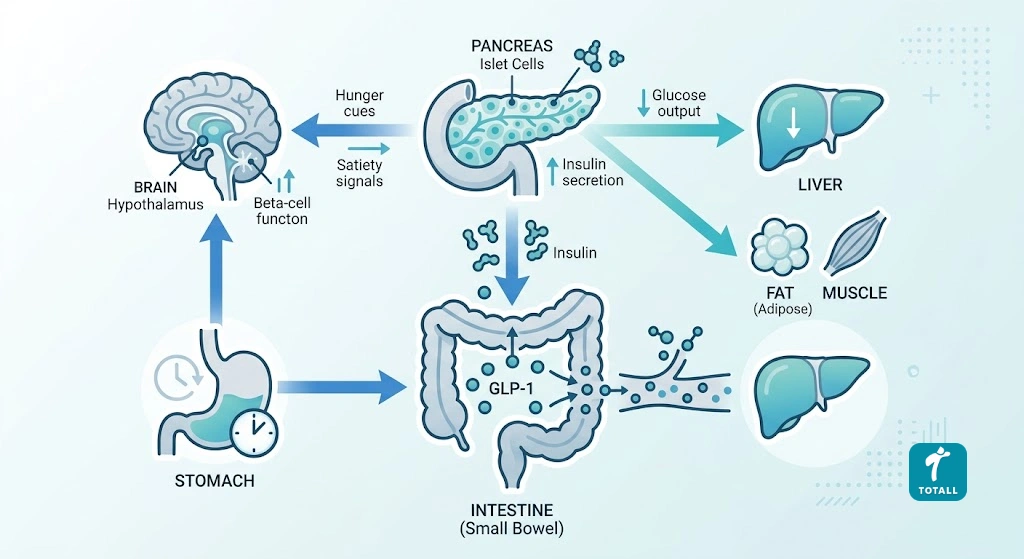
Semaglutide belongs to a drug class called GLP-1 receptor agonists. “Agonist” simply means it activates a receptor the way the body’s own hormone would, rather than blocking it. Here is what happens at each site where it acts:
- Pancreas. Semaglutide binds to GLP-1 receptors on beta cells and increases insulin secretion, but only in a glucose-dependent way. This matters because it is a large part of why semaglutide alone rarely causes dangerous low blood sugar, unlike insulin or sulfonylureas.
- Alpha cells. It suppresses glucagon release, reducing the liver’s output of glucose between meals.
- Stomach. It slows gastric emptying, so food sits in the stomach longer, which extends the feeling of fullness after eating and blunts the after-meal blood sugar spike.
- Brain. It acts on the hypothalamus and brainstem appetite centres, reducing hunger signals and food-related reward responses.
Because the fatty-acid side chain slows its clearance from the body, a single injection keeps receptor activity elevated for roughly a week, which is the basis for once-weekly dosing. The oral tablet form works on the same receptors, but it has to survive the acidic environment of the stomach to be absorbed, which is why it is combined with an absorption enhancer and has to be taken on a completely empty stomach with a strict waiting period before food or other medicines.
4. Semaglutide Tablets vs Injection: A Straight Comparison
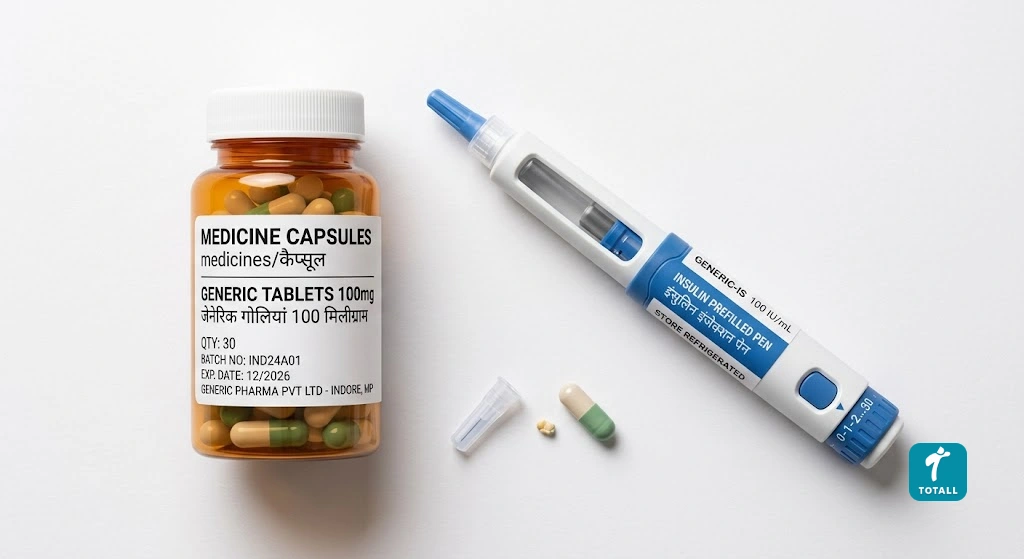
A large share of the search volume around semaglutide is people trying to decide between the tablet and the injection. Here is an honest comparison rather than a marketing one.
| Factor | Semaglutide Injection | Semaglutide Tablets (Oral) |
|---|---|---|
| Frequency | Once weekly | Once daily |
| Absorption | Near complete, goes straight into the bloodstream | Low and inconsistent (roughly 1 percent of the dose is absorbed), which is why oral doses look much higher on paper than injectable ones |
| Dosing rules | No food restriction; can be given any day, any time | Must be taken first thing in the morning on an empty stomach with no more than half a cup of plain water, then a wait of at least 30 minutes before eating, drinking anything else, or taking other oral medicines |
| Common Indian brands | Ozempic, Wegovy, Noveltreat, Sematrinity, Obeda, Semaglyn, Semasize | Rybelsus, and newer domestic oral brands such as Sembolic and Semalix |
| Practical fit | Suits people comfortable injecting themselves once a week and who want the most predictable effect | Suits people who want to avoid needles entirely but can reliably stick to a strict morning routine |
| Typical effectiveness at approved doses | Generally more predictable weight and glucose effect at a given approved dose | Effective, but the strict administration rules mean real-world results are more sensitive to how well the routine is followed |
Neither one is objectively superior. The injection tends to be more forgiving of a missed rule or two, since there is no food timing to manage, while the tablet removes needles entirely but only works well if the morning routine is followed exactly, every day. A consultation with TOTALL’s endocrine team is the right way to match the form to your lifestyle, other medicines and treatment goal.
5. What Semaglutide Is Approved to Treat
Semaglutide has three approved uses that matter for most patients:
- Type 2 diabetes mellitus. Used to improve blood sugar control, typically alongside diet, exercise, and often other diabetes medicines such as metformin.
- Chronic weight management. Approved for adults with a BMI in the obesity range, or a moderately raised BMI combined with a weight-related condition such as high blood pressure, high cholesterol or fatty liver disease, always alongside a reduced-calorie diet and increased physical activity, not as a standalone treatment.
- Reduction of major cardiovascular events. In people who already have type 2 diabetes and established cardiovascular disease, semaglutide has been shown in large outcome trials to lower the risk of heart attack, stroke and cardiovascular death.
It is not approved for type 1 diabetes, and using it purely for minor or cosmetic weight concerns without a genuine clinical indication is not what it was studied for or intended to do. See how it fits into a wider treatment plan on our Diabetes Mellitus and Obesity Management pages.
6. Semaglutide and Weight Loss: What Results Actually Look Like
People often ask how much weight they can expect to lose in a month or two on semaglutide, and the honest answer is that it depends heavily on the dose you are on, how long you have been titrating up, your starting weight, and your diet. It is worth understanding the shape of the response rather than fixating on a single number.
In the first month, most patients are still on the lowest starting doses, precisely because the dose is increased gradually to reduce nausea. Weight loss in this early phase is usually modest, often in the low single-digit percentage of body weight, and some of it is water and reduced bloating rather than fat loss. This is normal and expected, not a sign the drug isn’t working.
By two to three months, once the dose has been raised a couple of steps, appetite suppression becomes more noticeable and the rate of loss usually picks up. In the major clinical trials of semaglutide for weight management, participants on the highest approved dose lost on average around 15 percent of their starting body weight over 68 weeks, compared to roughly 2 to 3 percent in the group on lifestyle changes alone. Some individuals lost considerably more, others less. These are trial averages under monitored conditions with dietary counselling built in, not a guarantee for any one person.
The pace also slows over time. Rapid loss in the first weeks followed by a more gradual decline, and eventually a plateau, is the typical pattern, not a sign of treatment failure. Anyone quoting a fixed number of kilograms per month as a promise is oversimplifying a response that genuinely varies from person to person.
7. Does Semaglutide Get Rid of Belly Fat Specifically?
This question comes up constantly, and it deserves a clear answer: semaglutide does not target belly fat specifically, and no medication does. What it does is create a calorie deficit through appetite suppression, and the body loses fat from multiple areas as a result, including visceral fat around the abdominal organs.
There is actually a reasonably encouraging detail here. Visceral fat, the metabolically active fat around the waist and internal organs, tends to respond well to sustained weight loss regardless of the method used to achieve it, and several studies on GLP-1 receptor agonists have shown meaningful reductions in waist circumference and visceral fat area alongside overall weight loss. So while semaglutide is not “targeting” the belly in any selective way, a reduction in abdominal fat is a realistic and well-documented part of the overall weight loss picture for most people who respond to treatment. Spot reduction as a concept, losing fat from one chosen area while leaving the rest untouched, is not something semaglutide or any other drug can do.
8. Can a Normal-Weight Person Take Semaglutide?
Semaglutide is approved and studied for people with obesity, or overweight plus a weight-related health condition, and for people with type 2 diabetes. It was not studied in, and is not recommended for, people who are already at a healthy body weight and simply want to lose a few extra kilograms for appearance.
Taking a GLP-1 medicine without a genuine clinical indication carries real downsides that are easy to underestimate: unnecessary appetite suppression can lead to inadequate nutrition, disproportionate muscle loss relative to fat loss, and it exposes a person to the drug’s side effect profile, including gallstone risk and gastrointestinal symptoms, without a matching medical benefit. If your BMI is already in the normal range, the more appropriate route is a conversation with a doctor about what you are actually trying to achieve, rather than starting a prescription weight-loss medicine on your own initiative.
9. Dosage, Titration and Injection Technique
Semaglutide is always started at a low dose and increased in steps, usually at intervals of about four weeks, based on how well it is tolerated and how the patient is responding. This gradual increase, called titration, exists specifically to reduce nausea and other gastrointestinal side effects, which are far more common and severe if the dose is raised too quickly. The exact starting dose, the speed of titration, and the target maintenance dose differ between the diabetes indication and the weight management indication, and between brands and formulations.
We are intentionally not publishing a specific milligram-by-week schedule in this article. The right starting dose and titration pace depend on your diagnosis, kidney function, other medicines, and how your body tolerates the first few doses, and getting any of those wrong is one of the most common reasons people experience severe nausea or stop treatment altogether. This is a decision for your prescribing doctor to make and adjust over time, not something to copy from a chart found online.
Injection sites. The injectable form is given subcutaneously, meaning just under the skin, typically in the abdomen, the front of the thigh, or the back of the upper arm. Sites should be rotated week to week to reduce irritation at any one spot. Your nurse or doctor will demonstrate the correct technique at your first visit; this is not something to learn for the first time from a video.
When to increase the dose. Dose increases are timed by your doctor based on tolerance and response, generally not before four weeks on the current dose, and never based on impatience with the rate of weight loss. Increasing too soon significantly raises the risk of vomiting and dehydration.
10. When Does Semaglutide Start Working, and Why Might It Stop?
Some effects begin almost immediately. Appetite reduction and a feeling of fullness after smaller meals are often noticeable within the first one to two weeks, even at the lowest starting dose. Meaningful, visible weight loss usually takes longer, typically becoming noticeable from around four to eight weeks in, as the dose is increased and the effect builds.
If semaglutide seems to have stopped working, or never worked as expected, there are usually a handful of explanations, and it is worth ruling them out systematically rather than assuming the drug has simply failed:
- The dose plateaued too early. Staying too long on a low dose, or not reaching an effective maintenance dose, limits results.
- Calorie intake crept back up. As appetite suppression softens the urgency around food, it becomes easier to unconsciously eat more, particularly calorie-dense food, which can offset the drug’s effect.
- Natural weight loss plateau. The body adapts metabolically to weight loss over time, a phenomenon seen with every method of weight loss, not just medication.
- Inconsistent dosing. Missed weekly injections, or for tablets, not following the strict empty-stomach timing, meaningfully reduce effectiveness.
- Product quality or storage issues. Semaglutide pens and vials must be stored refrigerated; a break in the cold chain during shipping or storage can reduce potency.
If you feel your treatment has stalled, the right next step is a review with your prescribing doctor, not a dose increase you decide on yourself.
11. Semaglutide Brands in India, Cost, and How It Compares to Ozempic
Novo Nordisk’s core semaglutide patent expired in India in March 2026. Within days, several major Indian pharmaceutical companies launched approved generic versions at significantly lower prices than the original branded product. This is the single biggest reason semaglutide has become so much more accessible in India over the course of 2026.

| Manufacturer | Brand Name(s) | Form | Approx. Indicative Monthly Cost* |
|---|---|---|---|
| Novo Nordisk (innovator) | Ozempic, Wegovy, Rybelsus | Injection (pen) / Tablet | Highest priced option in the market; verify current pharmacy pricing |
| Sun Pharma | Noveltreat (weight management), Sematrinity (diabetes) | Injection | Roughly Rs 900 to Rs 2,000 per week depending on dose |
| Dr Reddy’s | Obeda | Injection (pre-filled pen) | Roughly Rs 2,400 to Rs 4,200 per month |
| Zydus Lifesciences | Semaglyn, Mashema, Alterme | Injection (reusable pen) | Approximately Rs 2,200 per month |
| Alkem Laboratories | Semasize, Obesema, Hepaglide | Injection (disposable/reusable pen) | From approximately Rs 1,800 per month |
| Natco Pharma / Eris | Semanat, Semafull, Sundae | Injection (vial and pen options) | From approximately Rs 1,290 per month for the vial format, the most affordable option currently on the market |
| Torrent Pharmaceuticals | Sembolic, Semalix | Injection and oral tablet | Varies by dose and format |
| Glenmark | GLIPIQ | Injection | Varies by dose |
| Mankind Pharma | Samakind | Injection | Varies by dose |
*Prices are indicative, change frequently, vary by dose, strength and pharmacy, and should be confirmed at the time of purchase. Listing a brand here is not a recommendation of that specific product; which brand and format suits you is a clinical decision. TOTALL Pharmacy stocks genuine, cold-chain-verified semaglutide brands with home delivery across India; see current stock and pricing via our TOTALL Pharmacy page or ask during your consultation.
Is Ozempic or Semaglutide Cheaper?
“Semaglutide” and “Ozempic” refer to the same active molecule; Ozempic is simply Novo Nordisk’s original branded product. What people usually mean by this question is whether the branded original or an Indian generic semaglutide product is cheaper, and the answer is that the generics are substantially cheaper, often by 50 to 80 percent, since they entered the market after patent expiry without the original developer’s research and marketing costs built into the price.
What Is the Cheapest Way to Get Semaglutide?
The lowest listed prices in the current Indian market are for multi-dose vial formulations from domestic manufacturers rather than pre-filled pens, since vials avoid the added device cost. That said, the cheapest option on paper is not automatically the right choice: vials require the patient or a caregiver to draw up the correct dose with a separate syringe, which carries a higher risk of dosing error than a pre-set pen if not taught properly. Buying only through a licensed pharmacy, and getting proper technique training, matters more for overall cost-effectiveness than chasing the single lowest sticker price.
Is Semaglutide Cheaper in India?
Yes, substantially. Even before generics launched, semaglutide in India was priced below many Western markets. Since the March 2026 patent expiry and the arrival of multiple domestic manufacturers, India now has some of the most affordable semaglutide pricing globally, which is also why the country has become a focus of attention from international patients and pharmaceutical commentators.
Is Semaglutide Available Without a Prescription in India?
No. It is a prescription-only medicine regulated by the CDSCO and DCGI. Buying it through unverified online sellers carries real risk: counterfeit product, a broken cold chain during shipping (semaglutide must stay refrigerated), and dosing without any medical oversight. Source it only through a licensed pharmacy against a valid prescription.
12. Semaglutide Side Effects, From Common to Serious

Most semaglutide side effects are gastrointestinal, connected directly to how the drug slows digestion, and they tend to ease over time, especially when the dose is raised slowly rather than quickly.
Common side effects
- Nausea, the most frequently reported side effect, especially in the days following a dose increase
- Diarrhoea or constipation, sometimes alternating
- Vomiting
- Stomach pain, bloating or reflux
- Reduced appetite (the intended effect, but sometimes more pronounced than expected)
- Fatigue
- Headache
Less common but clinically important side effects
- Gallstones or gallbladder inflammation, more likely with rapid weight loss
- Low blood sugar, particularly when combined with insulin or sulfonylureas
- Injection-site reactions such as redness or itching
- Mood changes; some patients report low mood or anxiety, which should be reported to a doctor rather than managed silently
- Hair thinning, usually linked to rapid weight loss and reduced nutrient intake rather than a direct drug effect
Rare but serious, requiring prompt medical attention
- Severe, persistent abdominal pain, often radiating to the back, which can indicate pancreatitis
- Signs of a severe allergic reaction: facial or throat swelling, difficulty breathing, widespread rash
- Sudden changes in vision
- Signs of dehydration or kidney strain, particularly after prolonged vomiting or diarrhoea
If you experience severe or worsening symptoms while on semaglutide, contact your prescribing doctor promptly, or seek emergency care for severe abdominal pain, breathing difficulty, or signs of a serious allergic reaction.
13. Long-Term Safety: Can Semaglutide Damage Your Organs?
This question, whether semaglutide can damage organs over time, is worth answering honestly rather than dismissively, because the concern is not unreasonable given how new widespread long-term use of GLP-1 medicines still is.
The longest-running trial data available, covering several years of use in large patient populations, has not shown evidence of the drug causing progressive damage to the kidneys, liver or heart in properly screened patients. If anything, the cardiovascular outcome trials show a reduction in heart attack and stroke risk in high-risk patients, and studies in people with fatty liver disease have generally shown improvement in liver fat, not harm. Kidney function is actually one of the areas being studied for potential benefit, particularly in people with diabetes-related kidney disease, rather than a known risk.
The genuine, well-documented long-term risk factors are narrower and more specific: an increased risk of gallstones with rapid weight loss, a theoretical thyroid C-cell tumour risk based on findings in rodent studies (which is why the drug is avoided in people with a personal or family history of medullary thyroid carcinoma or MEN 2), and the ongoing question of muscle mass loss alongside fat loss if resistance exercise and adequate protein intake are not maintained during treatment. None of these amount to a pattern of direct organ damage in the way the question is often framed, but they are real considerations that your doctor should be monitoring through periodic checkups and blood work while you are on treatment, not something to assume away simply because the drug is now widely available.
14. Who Should Not Take Semaglutide
| Situation | Guidance |
|---|---|
| Personal or family history of medullary thyroid carcinoma, or MEN 2 syndrome | Semaglutide should not be used |
| Pregnancy or actively planning pregnancy | Not recommended; discuss alternatives, and stop semaglutide well ahead of a planned pregnancy on your doctor’s advice |
| Breastfeeding | Discuss with your doctor; data in this area is still limited |
| History of pancreatitis | Use only with caution and close monitoring |
| Severe gastrointestinal disease, such as gastroparesis | May worsen symptoms; needs specialist evaluation before starting |
| Type 1 diabetes | Not an approved use |
| Severe kidney or liver impairment | Requires individualised assessment |
| Known hypersensitivity to semaglutide or its formulation components | Should not be used |
| Normal body weight with no weight-related health condition | Not an approved or appropriate use; see section 8 above |
This list is educational and not exhaustive. A full medical history review with an endocrinologist remains the only reliable way to determine whether semaglutide is appropriate and safe for your specific situation.
15. Who Can Prescribe Semaglutide in India?
In India, semaglutide is a Schedule H prescription medicine, which means it legally requires a prescription from a registered medical practitioner. In practice, it is most commonly prescribed by endocrinologists (specialists in hormone and metabolic conditions), diabetologists, and physicians experienced in obesity management, since starting and monitoring treatment properly involves screening for contraindications, choosing an appropriate starting dose, and following up as the dose is increased. A general physician can also prescribe it, particularly for diabetes management, but for weight management specifically, a doctor with dedicated experience in metabolic and obesity medicine, working alongside a dietitian, generally gives a safer and more effective outcome than a single prescription handed over without a structured follow-up plan.
16. Alcohol, Food, B12 and Drug Interactions
Alcohol. There is no dangerous direct chemical interaction between semaglutide and alcohol, but alcohol can worsen the nausea and stomach irritation many patients already experience, it adds calories that work against the treatment goal, and combined with reduced food intake, it can make blood sugar less stable. Keeping alcohol minimal, particularly during dose increases, is generally advised.
Food. Because semaglutide slows gastric emptying, large, fatty or very rich meals are more likely to trigger nausea or discomfort. Smaller, more frequent, protein-forward meals tend to be far better tolerated, and they also help protect muscle mass during weight loss.
Vitamin B12. Some clinicians co-prescribe B12 alongside semaglutide, since reduced food intake over a long period can lower B12 status in some patients, and mild B12 deficiency can itself cause fatigue and low mood, symptoms that overlap with some semaglutide side effects. This is not a universal requirement and should be based on your blood work, not assumed.
Other medicines.
- Metformin is commonly and safely combined with semaglutide for type 2 diabetes management.
- Insulin or sulfonylureas combined with semaglutide can increase the risk of low blood sugar; your doctor may need to adjust these doses when starting semaglutide.
- Because semaglutide slows how quickly the stomach empties, it can affect how quickly some oral medicines are absorbed. Always disclose every medicine and supplement you take to your prescribing doctor.
Drug tests. Semaglutide is not a controlled substance and does not appear on standard workplace or medical drug screening panels, which look for substances such as opioids, cannabis or amphetamines, not GLP-1 receptor agonists.
17. What Happens When You Stop Semaglutide?
A large share of people who stop semaglutide regain some weight afterward, and this is well documented in follow-up studies, not a rare exception. The reason is straightforward: appetite and hunger signalling tend to return toward their pre-treatment state once the drug clears the system, and if the underlying habits that led to weight gain in the first place have not changed, the same pressures reassert themselves.
This is not a reason to avoid treatment, but it is a reason to plan for it properly from the start rather than treating semaglutide as a short course with a fixed end date. Patients who maintain results best tend to be the ones who used the treatment period to build durable habits, particularly around protein intake, regular resistance exercise, and portion awareness, and who worked with their doctor on a structured taper or maintenance plan rather than stopping abruptly. If you are planning to stop semaglutide for any reason, discuss the timing and a follow-up plan with your prescribing doctor beforehand.
18. Pros and Cons, Weighed Honestly
| Pros | Cons |
|---|---|
| Strong, well-studied evidence for blood sugar control and significant weight loss | Common gastrointestinal side effects, especially during the first few months |
| Once-weekly injection option, a high level of convenience for a chronic condition | Requires long-term commitment; effects tend to reverse after stopping without a maintenance plan |
| Now significantly more affordable in India following the 2026 generic launches | Still represents a meaningful monthly cost for many households |
| Demonstrated cardiovascular benefit in people with diabetes and existing heart disease | Not suitable for everyone; several clear contraindications apply |
| Oral tablet option available for people who prefer to avoid injections | Requires prescription, screening and ongoing monitoring; not a self-managed medicine |
19. Myth vs Fact
| Myth | Fact |
|---|---|
| Semaglutide melts fat directly. | It works mainly by reducing appetite and slowing digestion, which lowers calorie intake. The weight loss follows from that deficit, combined with diet and activity. |
| It specifically targets belly fat. | It reduces overall body fat, and visceral abdominal fat does tend to respond well to the resulting weight loss, but there is no selective targeting of any one area. |
| Tablets and injections give identical results at the same dose number on the label. | Oral absorption is roughly 1 percent of the tablet’s content, far lower and more variable than the injection, so oral and injectable doses are not interchangeable milligram for milligram. |
| You can safely dose yourself once you know the general schedule from online sources. | Titration needs individualised medical judgement based on tolerance, kidney function and other medicines. Self-dosing significantly raises the risk of severe side effects and treatment failure. |
| It’s only for people who are very overweight. | It is also prescribed for type 2 diabetes management, and for people with a moderately raised BMI plus a weight-related health condition, not only for higher degrees of obesity. |
| Once you stop, the weight loss is guaranteed to stay off. | Without continued lifestyle changes and often ongoing medical guidance, many people regain some weight after stopping. Long-term planning matters as much as the treatment itself. |
| All Indian generic brands are functionally identical. | Every DCGI-approved brand must meet regulatory standards, but formulation (vial versus pen), storage handling by the seller, and individual patient response can still differ. Buy only from licensed pharmacies. |
| Semaglutide will show up on a workplace drug test. | It is not a controlled substance and is not included on standard drug screening panels. |
20. Semaglutide vs Tirzepatide vs Liraglutide
| Drug | Class | Frequency | Notes |
|---|---|---|---|
| Semaglutide | GLP-1 receptor agonist | Weekly (injection) or daily (tablet) | The most widely available and studied GLP-1 option in India following the 2026 patent expiry; used for both diabetes and weight management |
| Tirzepatide | Dual GLP-1 and GIP receptor agonist | Weekly (injection) | Sold in India as Mounjaro; acts on two hormone pathways and has shown strong weight loss results in head-to-head trial data, generally at a higher price point than generic semaglutide |
| Liraglutide | GLP-1 receptor agonist | Daily (injection) | An older GLP-1 medicine that requires daily dosing, generally producing less weight loss than semaglutide at typical approved doses |
There is no single best answer among these three. The right choice depends on your diagnosis, budget, tolerance for side effects, and treatment goal. This table is a starting point for a conversation with an endocrinologist, not a substitute for one.
21. Advice From TOTALL’s Endocrine Team
- Do not skip or rush the titration schedule. Increasing the dose too fast is the single biggest driver of severe nausea and treatment dropout that we see in practice.
- Prioritise protein and fibre in your diet. This protects muscle mass, reduces constipation, and makes the appetite suppression work with your nutrition rather than against it.
- Get baseline blood work done before starting, including kidney function, and a gallbladder assessment if you have relevant risk factors.
- Add resistance training, not just cardio, to reduce the proportion of weight lost from muscle rather than fat.
- Plan for maintenance from day one, not after you reach your goal. Ask your doctor what the plan looks like after you stop, before you start.
- Buy only from licensed pharmacies that maintain proper cold-chain storage. Semaglutide pens and vials are temperature-sensitive and lose potency if mishandled.
22. Key Takeaways
- Semaglutide is a GLP-1 receptor agonist used for type 2 diabetes and weight management, available as a weekly injection or a daily tablet.
- It works mainly by slowing digestion and reducing appetite signalling in the brain, not by directly burning fat or targeting any one body area.
- Realistic weight loss is gradual and varies by person; trial averages are around 15 percent of body weight over 68 weeks at the highest approved dose, not a guaranteed monthly figure.
- India’s semaglutide patent expired in March 2026, and multiple domestic brands now offer it at significantly lower prices than the original.
- Long-term trial data has not shown organ damage in properly screened patients; the genuine risks are narrower and specific, including gallstones and a thyroid contraindication for certain patients.
- It is prescription-only in India. Dosage, brand choice and monitoring should always be decided with a doctor, and most people regain some weight if they stop without a maintenance plan.
23. Frequently Asked Questions
What does semaglutide do to your body?
It slows digestion, increases insulin release when blood sugar is high, suppresses glucagon, and reduces appetite signals in the brain. The combined effect is lower blood sugar and reduced food intake, which leads to weight loss over time.
What does semaglutide do to your body long term?
Long-term trial data shows sustained blood sugar improvement, sustained weight loss with continued use, reduced cardiovascular event risk in high-risk patients, and improvement in liver fat in people with fatty liver disease. It has not shown evidence of progressive organ damage in properly screened, monitored patients.
Does semaglutide get rid of belly fat? Will I lose belly fat on semaglutide?
It does not target belly fat selectively, but visceral abdominal fat generally responds well to the overall weight loss semaglutide produces, so a reduction in waist circumference is a realistic and commonly observed part of treatment for people who respond to it.
How quickly can I lose 20 pounds on semaglutide? How much weight will I lose in 2 months?
There is no fixed timeline that applies to everyone. Early doses are low and titrated slowly specifically to limit side effects, so the first month typically shows modest loss. By two to three months, once the dose has increased, the rate usually picks up, but the exact amount depends on your dose, diet and individual response. Trial averages describe results over many months, not weeks.
Can semaglutide damage your organs? What are the dangers of taking semaglutide?
Available long-term data has not shown semaglutide causing progressive damage to the kidneys, liver or heart in appropriately screened patients; several outcomes in these areas are actually favourable. The specific, documented risks include gallstones (more likely with rapid weight loss), a rare thyroid tumour risk in animal studies that rules out use in people with certain thyroid cancer histories, and gastrointestinal side effects that are usually manageable with proper dose titration.
Is semaglutide ok for weight loss? Is it bad to use semaglutide for weight loss?
Semaglutide is an approved, evidence-backed option for weight management in people with obesity, or overweight plus a weight-related condition, when used under medical supervision alongside diet and exercise. It is not appropriate as a first choice for minor weight concerns or for people at a normal body weight.
Can a normal-weight person take semaglutide?
It is not approved or recommended for people already at a healthy body weight without a genuine medical indication such as diabetes. Doing so exposes a person to real side effects without a matching clinical benefit.
Who should not take semaglutide? Who cannot use semaglutide?
People with a personal or family history of medullary thyroid carcinoma or MEN 2, those who are pregnant or planning pregnancy, people with a history of pancreatitis, severe gastrointestinal disease such as gastroparesis, type 1 diabetes, or known hypersensitivity to the drug should generally avoid it. A full assessment by a doctor is needed to confirm safety in your specific case.
What do I need to know before starting semaglutide?
You should have a clear diagnosis or clinical reason for treatment, a discussion of contraindications and your full medical history, baseline blood work, an understanding of the titration schedule, and a realistic sense of timeline and expected side effects, ideally alongside a plan for diet and exercise support and what happens after you eventually stop.
Do you gain weight after stopping semaglutide?
Many people regain some weight after stopping, since appetite signalling tends to return toward its pre-treatment state once the drug clears the body. Maintaining habits built during treatment, and working with your doctor on a structured stopping plan, meaningfully affects how much weight is regained.
How much does semaglutide cost? How much does a month of semaglutide cost?
Since Indian generics launched in March 2026, monthly costs have ranged from roughly Rs 1,300 to over Rs 4,000 depending on the brand, dose and format, compared to notably higher pricing for the original branded product. Prices change frequently; check with a licensed pharmacy for current rates.
Is Ozempic or semaglutide cheaper? Is semaglutide cheaper in India?
Ozempic is simply the branded original version of semaglutide; Indian generic semaglutide products are substantially cheaper, often by 50 to 80 percent. India’s pricing, especially after the March 2026 patent expiry, is now among the most affordable for this medicine globally.
What is the cheapest way to get semaglutide?
Multi-dose vial formulations from domestic manufacturers are typically the lowest-priced option, though they require proper training in drawing up an accurate dose. Buying only from a licensed pharmacy with correct technique guidance matters more for overall safety and value than choosing based on price alone.
Are semaglutide tablets as effective as the injection?
Oral tablets can be effective, but absorption is far lower and more variable than the injection, so they require strict dosing rules and, in some cases, a higher relative dose to achieve comparable results.
Where is semaglutide injected? Where do you inject it?
The injectable form is given subcutaneously, usually in the abdomen, the front of the thigh, or the back of the upper arm, with sites rotated week to week. Correct technique should be taught in person by a nurse or doctor.
Who can prescribe semaglutide in India?
It is a Schedule H prescription medicine, most commonly prescribed by endocrinologists, diabetologists, and physicians experienced in obesity management, who can properly screen for contraindications and monitor treatment over time.
Can semaglutide be taken with metformin?
Yes, this is a common and generally safe combination for type 2 diabetes, prescribed and monitored by your doctor.
Will semaglutide cause muscle loss? Will it cause hair loss?
Some muscle loss can occur alongside fat loss with any significant weight reduction, including with semaglutide; adequate protein intake and resistance exercise substantially reduce this. Hair thinning has been reported by some patients, generally linked to rapid weight loss and nutritional shifts rather than a direct drug effect.
Will semaglutide show up on a drug test?
No. It is not a controlled substance and is not included on standard drug screening panels used by employers or in medical testing.
Is semaglutide available without a prescription in India?
No. It is a prescription-only medicine regulated by the CDSCO and DCGI, and it should only be purchased through a licensed pharmacy against a valid prescription.
24. Conclusion
Semaglutide has genuinely changed the treatment landscape for type 2 diabetes and obesity, and the wave of Indian generic brands that launched after the March 2026 patent expiry has made it far more accessible than it was even a year ago. But wider access does not change the fundamentals of how it should be used. It is most effective, and safest, when the starting dose, the brand, the titration schedule and the long-term plan are all set by a doctor who understands your specific health history, not chosen from a search result or a forum post.
If you are considering semaglutide for diabetes or weight management, the right starting point is a proper metabolic evaluation, not a self-selected dosage chart.
Book a consultation with TOTALL’s diabetes and obesity specialists in Indore to find out if semaglutide is right for you, get a personalised dosing plan, and access genuine, cold-chain-verified medicine through TOTALL Pharmacy. You can also call us directly at +91 731 244 3344 or WhatsApp here.