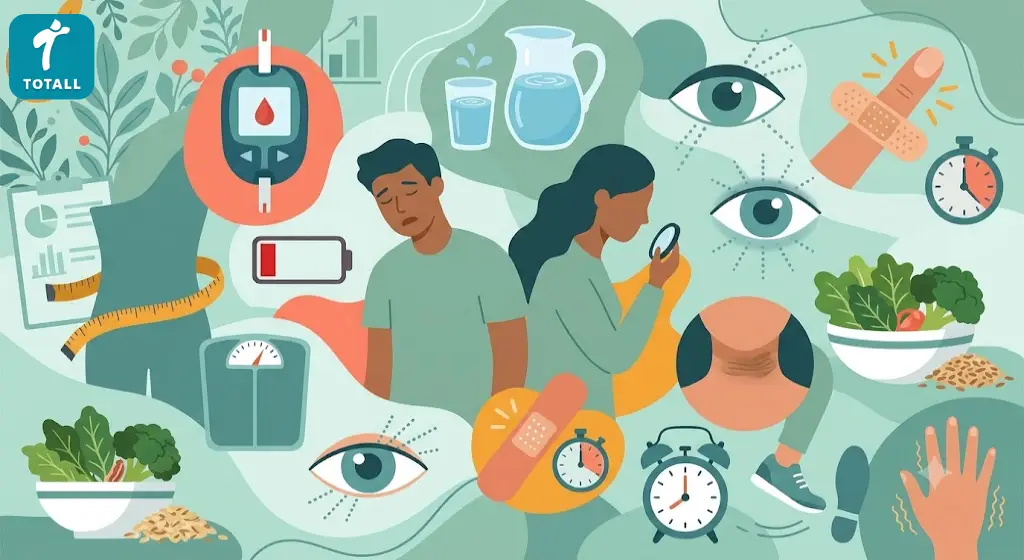
The early signs of diabetes are mild and easy to miss: needing to pass urine a little more often, being thirstier than usual, feeling tired after meals, gaining weight around the waist, and picking up skin or genital infections that keep returning. Prediabetes, the stage before diabetes, usually has no symptoms at all, which is why the clues often lie on your body and in your reports rather than in how you feel.
Our main guide to the signs of diabetes explains the classic symptoms and how diabetes is diagnosed. This article is about the early signs of diabetes, the stage before that. It covers what “early” actually means, the quiet clues to look for on your skin, waist and blood reports, how prediabetes differs from diabetes, why you can feel unwell with a normal sugar report, a simple Indian risk score you can work out yourself, and what the evidence says you can do while there is still time to change the course.
Key points
- Insulin resistance can start many years before blood sugar crosses the diabetes line, and it usually causes no symptoms.
- The best early clues are a waist above about 90 cm (men) or 80 cm (women), dark patches on the neck, skin tags, high blood pressure, fatty liver and a family history.
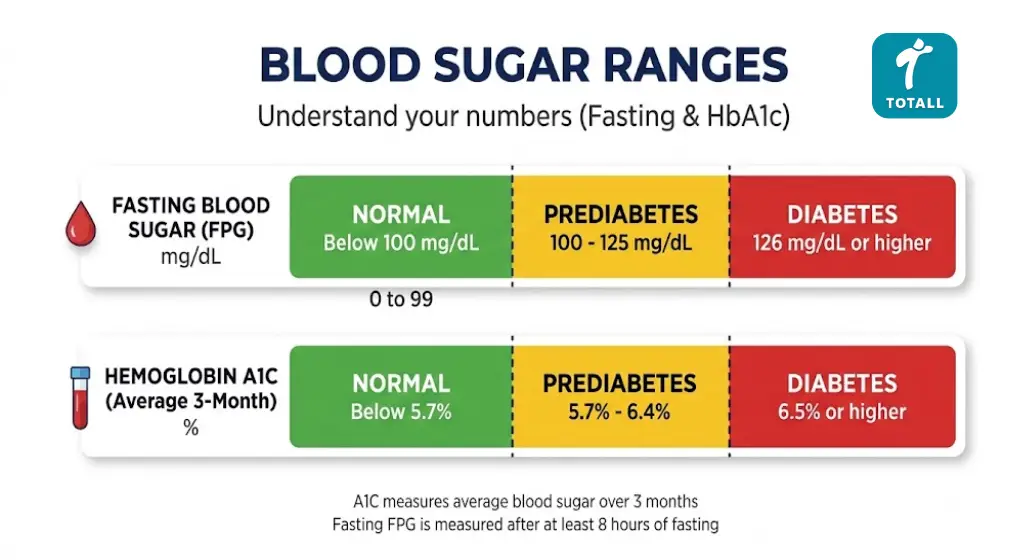
- Prediabetes means a fasting sugar of 100 to 125 mg/dL, a 2-hour sugar of 140 to 199 mg/dL, or an HbA1c of 5.7% to 6.4%.
- Structured lifestyle change can cut the risk of progressing to diabetes by well over a quarter in Indian studies.
What this guide covers
- What the early signs of diabetes really mean
- The stages: from insulin resistance to diabetes
- The early signs of diabetes you may notice
- Silent clues: early signs of diabetes that do not feel like symptoms
- Prediabetes symptoms: what to expect
- Prediabetes versus diabetes
- Symptoms with a normal sugar report
- Check your risk: the Indian Diabetes Risk Score
- Tests and follow-up
- What you can do now
- Testing and care in Indore
- डायबिटीज के शुरुआती लक्षण (हिंदी में सार)
- Frequently asked questions
What the early signs of diabetes really mean
When people search for the early signs of diabetes, they usually mean the first symptoms they could notice. Doctors think about “early” differently. In type 2 diabetes, the process begins quietly, often a decade or more before diagnosis, when the body’s cells start responding poorly to insulin. The pancreas compensates by making more insulin, and blood sugar stays normal for a long time. Eventually the pancreas cannot keep up, sugar starts to rise, and only then do symptoms begin.
So the honest answer to “what are the early signs of diabetes” has two parts: symptoms that may appear once sugar has started to rise, and risk markers that show up long before. The second group is the one that gives you the most time to act.
The stages: from insulin resistance to diabetes
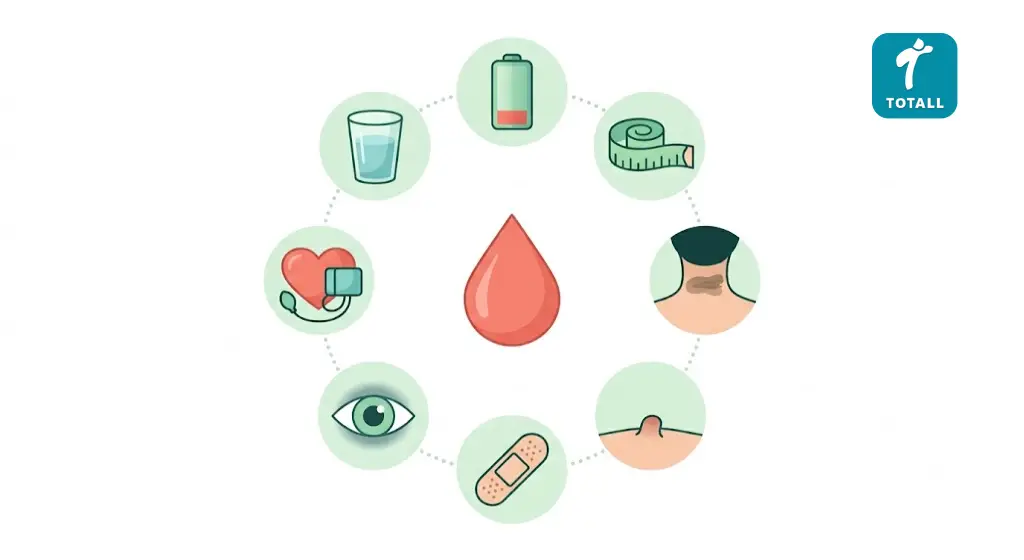
Type 2 diabetes does not switch on overnight. It moves through stages, and the earlier you catch it, the more reversible it tends to be.
| Stage | What is happening | What you may notice | Blood sugar |
|---|---|---|---|
| 1. Insulin resistance | Cells respond poorly to insulin. The pancreas makes extra | Often nothing. Belly fat, dark neck patches, skin tags, PCOS features | Normal |
| 2. Prediabetes | Pancreas is struggling. Sugar drifts above normal | Usually nothing. Sometimes tiredness after meals | Fasting 100 to 125, 2-hour 140 to 199, HbA1c 5.7% to 6.4% |
| 3. Early type 2 diabetes | Sugar crosses the diagnostic line | Mild thirst, extra urination, tiredness, infections, or still nothing | Fasting 126 or more, HbA1c 6.5% or more |
| 4. Established diabetes | Sugar stays high for years | Classic signs, then complications if untreated | Variable |
Stages 1 and 2 are the window in which the early signs of diabetes can still be turned back, and lifestyle change works best. By stage 3, treatment is usually needed alongside lifestyle.
The early signs of diabetes you may notice
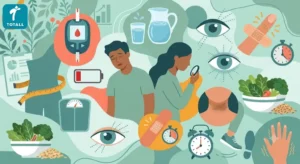
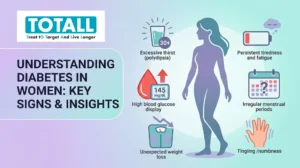
Once sugar has started to rise, these are the early signs of diabetes that people report first. None of them is dramatic, and any of them can have another cause, which is exactly why early stage diabetes symptoms are missed.
A slight change in urination. You may be getting up once more at night than before, or passing a little more urine through the day. Because it builds slowly, you may not notice until someone points it out. We explain the mechanism in our guide to the 8 classic signs of diabetes.
Thirst you start to manage without noticing. A bottle of water on the desk, a glass at the bedside, a dry mouth in the morning. People adapt to a creeping thirst and stop registering it as a symptom.
Tiredness, especially after meals. A sudden drop in energy and sleepiness one to two hours after a carbohydrate-heavy meal is common in healthy people, so on its own it means little. It becomes more meaningful when it is regular, severe, and comes with a waistline that has been growing.
Hunger that comes back quickly. Strong hunger or sugar cravings a couple of hours after eating can reflect swings in insulin and glucose.
Infections that keep coming back. Recurrent fungal infections in skin folds, repeated urinary infections, frequent boils, bleeding gums and cuts that heal slowly are among the more reliable early signs, because high sugar weakens local defences.
Blurry vision that comes and goes. Fluctuating focus, especially if your glasses seem wrong from one week to the next, can reflect changing sugar levels.
Tingling or numbness in the toes or fingertips. Nerve changes can already be present at diagnosis in type 2 diabetes. It is less common as a first sign but should never be ignored.
Silent clues: early signs of diabetes that do not feel like symptoms
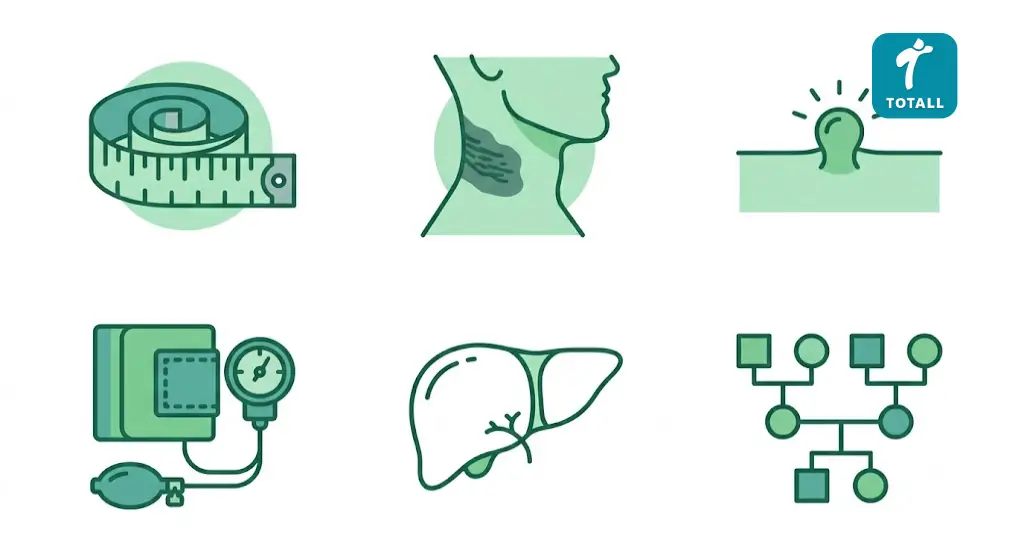
This is the section that matters most for early detection, because these are the silent signs of diabetes. These early signs of diabetes do not make you feel unwell, which is why they are overlooked, but together they tell a doctor that insulin resistance is likely.
A waist above the Indian cutoff
Indians tend to carry fat around the abdomen and liver even at a normal BMI. A waist of about 90 cm or more in men and 80 cm or more in women marks higher risk. Measure at the level of the navel, standing, after a normal breath out. Our guide on waist circumference and belly fat in Indians shows how, and the one on BMI cutoffs for Indians explains why the usual BMI table is too generous for South Asians.
Dark neck patches and skin tags
Thickened, darker, velvety skin on the back of the neck, under the arms or in the groin is called acanthosis nigricans, and it is a direct visible sign of high insulin levels. Skin tags in the same areas point the same way. They are common in Indian adults and teenagers and are often dismissed as dirt or friction.
Clues in routine reports
Look at what your routine tests already say. High triglycerides with low HDL cholesterol, a blood pressure that has been creeping up, mildly raised liver enzymes, and fatty liver on an ultrasound are all strongly linked with insulin resistance. If an ultrasound report says “grade 1 fatty liver” and no one mentioned your blood sugar, ask for it.
History that raises risk
A parent or sibling with diabetes, polycystic ovary syndrome, gestational diabetes in a past pregnancy, a baby with a high birth weight, and long-term steroid use all raise risk. Loud snoring with daytime sleepiness, a sign of sleep apnoea, is another. If one or more of these apply, you do not need symptoms to justify a test. Women can read more in our guide to signs of diabetes in women, and men in signs of diabetes in men.
Prediabetes symptoms: what to expect
Honestly, in most people prediabetes symptoms do not exist. That is not a flaw in how you are paying attention. Prediabetes is defined by blood test numbers, not by symptoms, and sugar at this level seldom causes thirst or frequent urination because it stays below the level at which the kidneys begin to spill glucose into the urine. What people sometimes describe is milder and non-specific: tiredness, more hunger, difficulty losing weight, or the clues described in the previous section.
The scale of this in India is large. The ICMR-INDIAB study, published in 2023, estimated about 136 million Indians (15.3%) had prediabetes, more than the roughly 101 million with diabetes. Source: ICMR-INDIAB national study, Lancet Diabetes and Endocrinology. Prediabetes is not a harmless pause: a meaningful share of people with it go on to develop diabetes within a few years, and some already have early damage to nerves or small vessels.
Prediabetes versus diabetes
People often ask how the early signs of diabetes differ from prediabetes symptoms. In practice, the difference is the numbers, plus the fact that the classic symptoms usually appear only on the diabetes side of the line.
| Normal | Prediabetes | Diabetes | |
|---|---|---|---|
| Fasting plasma glucose | Below 100 mg/dL | 100 to 125 mg/dL | 126 mg/dL or higher |
| 2-hour glucose after 75 g glucose drink | Below 140 mg/dL | 140 to 199 mg/dL | 200 mg/dL or higher |
| HbA1c | Below 5.7% | 5.7% to 6.4% | 6.5% or higher |
| Typical symptoms | None | Usually none | May be none, or thirst, frequent urination, tiredness, infections |
| Usual first step | Retest in 1 to 3 years | Lifestyle change, yearly testing | Confirm, then medical plan |
One detail often causes confusion. Some labs and guidelines, including WHO, begin the prediabetes range for fasting glucose at 110 mg/dL instead of 100 mg/dL. If a report tells you your fasting sugar of 104 is “normal” while another calls it “impaired”, this is probably the reason. In either case, a reading in that grey area is a reason to also check post-meal sugar and HbA1c.
Symptoms with a normal sugar report
A common situation: you have what look like the early signs of diabetes, you take a fasting sugar test, and it is normal. Does that rule out diabetes? Not always, and not necessarily.
First, fasting sugar can be normal in people whose sugar rises mainly after meals, which is common in Indians in the early stage. A post-meal glucose or a glucose tolerance test can reveal what the fasting test missed. Second, HbA1c can be falsely low or high in people with anaemia or certain haemoglobin variants, both common in India, so a normal HbA1c with persistent symptoms deserves a second look.
Third, and just as important, your symptoms may not come from sugar at all. An underactive thyroid, anaemia, low vitamin B12, vitamin D deficiency, sleep apnoea, depression, anxiety, urinary infections, and medicines such as steroids can all cause tiredness, thirst or frequent urination. If sugar tests are clearly normal across fasting, post-meal and HbA1c, the right move is to look for these causes. Reading our guide to thyroid diseases is a good start, and an endocrinologist can sort these out in one visit.
Also remember that a sudden episode of shakiness, sweating and hunger a few hours after a heavy carbohydrate meal can happen in early insulin resistance, because insulin is released late and overshoots. If it keeps happening, mention it to your doctor.
Check your risk: the Indian Diabetes Risk Score
The Madras Diabetes Research Foundation developed a simple score called the Indian Diabetes Risk Score (IDRS) that uses four things you can answer yourself: age, waist, physical activity and family history. It was designed to help decide who needs a blood test.
| Factor | Category | Points |
|---|---|---|
| Age | Under 35 years | 0 |
| 35 to 49 years | 20 | |
| 50 years or more | 30 | |
| Waist | Women under 80 cm, men under 90 cm | 0 |
| Women 80 to 89 cm, men 90 to 99 cm | 10 | |
| Women 90 cm or more, men 100 cm or more | 20 | |
| Physical activity | Regular vigorous exercise or strenuous work | 0 |
| Regular moderate exercise or moderate work | 10 | |
| Mild exercise or mild work | 20 | |
| No exercise and sedentary work | 30 | |
| Family history | No family history | 0 |
| One parent has diabetes | 10 | |
| Both parents have diabetes | 20 |
Add the points. A score of 60 or more suggests high risk and a blood test is clearly needed. A score of 30 to 50 suggests moderate risk, and a test is still sensible. Below 30 is low risk, though not no risk. The score is a screening aid, not a diagnosis, and it cannot replace a blood test. If your score is high, do not wait for symptoms.
Tests and follow-up
If your risk is raised or you have any early signs of diabetes, ask for three tests together: a fasting plasma glucose, a post-meal glucose (or a 75 g glucose tolerance test) and an HbA1c. Do not change your diet in the days before, since that can hide the result. The diagnostic thresholds are in the table above and in our main guide.
If everything is normal, repeat testing every one to three years, and yearly if you stay at higher risk. If it shows prediabetes, retest at least once a year, and ask your doctor to check blood pressure, cholesterol and liver as well, since they travel together. If it shows diabetes, a repeat test usually confirms it, unless sugar is very high with classic symptoms, in which case treatment starts without delay. TOTALL’s pathology laboratory performs these tests.
What you can do now
This is the encouraging part, because the early signs of diabetes can often be turned back. The Diabetes Prevention Program in the United States found that intensive lifestyle change cut the risk of developing diabetes by about 58% over three years in adults with prediabetes, and metformin cut it by about 31%. In India, the Indian Diabetes Prevention Programme found that lifestyle change and metformin each lowered progression by about a quarter to a third.
What worked in those programmes was not magic. Participants lost a modest amount of weight (about 5% to 7% of body weight in the American programme), exercised about 150 minutes a week, and cut down on refined carbohydrates and fat. Sleep matters too, and so does stopping smoking. If your waist is above the cutoffs, reducing it is the single most useful target. Our guide on avoiding diabetes risk factors covers the basics, and the one on fruit and diabetes answers the question most people ask first.
Two cautions. Please do not start a crash diet or buy “sugar control” powders or supplements on the strength of a prediabetes report. And whether metformin or any other medicine is right for you is a decision for your doctor, based on your numbers, weight and other conditions, not something to start on your own.
Testing and care in Indore
If you notice the early signs of diabetes and live in Indore, Ujjain, Dewas or elsewhere in Madhya Pradesh, you can get tested and see an endocrinologist at TOTALL Diabetes Hormone Institute. TOTALL’s sugar control unit supports people who need a structured plan, and its body checkup packages offer a broader health review. For weight, obesity treatment is also available. If you want to understand what high sugar does over time, read how diabetes affects the body.
Book a diabetes test or consultation in Indore
TOTALL Diabetes Hormone Institute, BCM Health Island, Scheme No 54 (near Bombay Hospital and behind Prestige Management Institute), Indore, Madhya Pradesh 452010.
Open Monday to Saturday, 8:00 AM to 8:00 PM. Sunday closed.
Call or message on WhatsApp 093024 43344 or book an appointment online.
डायबिटीज के शुरुआती लक्षण (हिंदी में सार)
डायबिटीज के शुरुआती लक्षण हल्के होते हैं: रात में एक बार ज्यादा पेशाब, ज्यादा प्यास, खाने के बाद थकान या नींद, कमर के आसपास चर्बी, बार-बार फंगल या पेशाब का संक्रमण और धुंधला दिखना। प्रीडायबिटीज में अक्सर कोई लक्षण नहीं होता, इसलिए असली संकेत शरीर और रिपोर्ट में मिलते हैं: कमर पुरुषों में 90 सेमी और महिलाओं में 80 सेमी से ज्यादा, गर्दन पर काले धब्बे, स्किन टैग, हाई बीपी, फैटी लिवर और परिवार में डायबिटीज।
प्रीडायबिटीज का मतलब है खाली पेट शुगर 100 से 125, खाने के 2 घंटे बाद 140 से 199, या HbA1c 5.7% से 6.4%। इस स्तर पर वजन घटाना, रोज करीब 150 मिनट व्यायाम और खान-पान में सुधार से डायबिटीज को टाला जा सकता है। इंदौर में जांच और परामर्श के लिए TOTALL में 0731 244 3344 पर संपर्क करें।
Frequently asked questions about the early signs of diabetes
What are the early signs of diabetes?
Early signs include passing urine slightly more often, extra thirst, tiredness (especially after meals), quick return of hunger, recurring skin or genital infections and blurry vision that comes and goes. Many people have no early signs at all, and quiet clues such as a larger waist or dark neck patches may be the only hint.
Can you have prediabetes without any symptoms?
Yes, and most people do. Prediabetes is diagnosed by blood tests, not by how you feel, and sugar at that level rarely causes thirst or frequent urination. Risk markers such as belly fat, dark neck patches, high blood pressure and fatty liver are usually the only clues.
What are the signs of prediabetes?
There are usually no signs. Some people notice tiredness, more hunger or difficulty losing weight. Physical clues include a waist above about 90 cm in men or 80 cm in women, dark velvety skin on the neck, skin tags, high blood pressure and a family history. A blood test is the only way to confirm it.
What is the difference between prediabetes and diabetes?
Prediabetes means blood sugar is above normal but below the diabetes threshold: fasting 100 to 125 mg/dL or HbA1c 5.7% to 6.4%. Diabetes starts at fasting 126 mg/dL or HbA1c 6.5%. Symptoms are usually absent in prediabetes and may be present in diabetes. Prediabetes can often be slowed or stopped.
Is prediabetes reversible?
In many people, yes. Weight loss of about 5% to 7%, regular exercise and better food choices can bring sugar back to the normal range or delay diabetes. Studies in both the United States and India show lifestyle change lowers progression to diabetes substantially. It needs to be maintained, and your sugar should still be tested yearly.
Can I have symptoms of diabetes with a normal blood sugar report?
Possibly, for two reasons. Fasting sugar can be normal when sugar rises after meals, so a post-meal test may be needed. Or the symptoms may come from another problem such as thyroid disease, anaemia, vitamin deficiency, sleep apnoea or infection. If all tests are clearly normal, look for other causes.
How long can you have diabetes without knowing?
Type 2 diabetes can go unnoticed for years because sugar rises slowly and symptoms are mild or absent. Many people are diagnosed during a routine test or when a complication appears. Testing from age 30, or earlier with risk factors, helps catch it sooner.
Does feeling tired after eating mean prediabetes?
Not by itself. A dip in energy after a heavy meal is common in healthy people. It is more suspicious if it is severe, happens after most meals and comes with a growing waistline, thirst or frequent urination. In that case a fasting and post-meal sugar test is worthwhile.
How often should someone with prediabetes be tested?
At least once a year with a fasting glucose and HbA1c, and a post-meal glucose if results are borderline. Your doctor may test more often if your numbers are rising or you have other risk factors such as high blood pressure or fatty liver.
Which test should I take first if I suspect early diabetes?
Take a fasting plasma glucose, a post-meal glucose (or a 75 g glucose tolerance test) and an HbA1c together at a reliable laboratory, without changing your diet beforehand. Take the report to an endocrinologist or diabetologist for interpretation.
Where can I get tested for prediabetes in Indore?
You can get blood sugar tests and consult an endocrinologist at TOTALL Diabetes Hormone Institute, BCM Health Island, Scheme No 54, Indore. It is open Monday to Saturday from 8:00 AM to 8:00 PM. You can call 0731 244 3344 or book through the appointment page.
References and further reading
- American Diabetes Association. Standards of Care in Diabetes, section on prevention or delay of diabetes. professional.diabetes.org.
- Anjana RM, et al. ICMR-INDIAB national cross-sectional study. Lancet Diabetes Endocrinol. 2023. Read the paper.
- Diabetes Prevention Program Research Group. Reduction in the incidence of type 2 diabetes with lifestyle intervention or metformin. N Engl J Med. 2002.
- Ramachandran A, et al. The Indian Diabetes Prevention Programme. Diabetologia. 2006.
- Mohan V, et al. A simplified Indian Diabetes Risk Score for screening for undiagnosed diabetic subjects. J Assoc Physicians India. 2005.
- World Health Organization. Diabetes fact sheet. who.int.
- NHS. Prediabetes. nhs.uk.
About this article. Written and medically reviewed by Dr. Sunil M Jain, Chairman and Managing Director of TOTALL Diabetes Hormone Institute (Madhya Pradesh Medical Council registration MP-2912, MCI registration 13607).