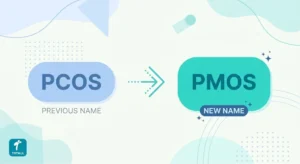

Medically reviewed by the endocrine and obesity-medicine team at TOTALL Diabetes Hormone Institute, Indore.
If you already have a PCOS diagnosis, or you’re partway through treatment, the news that the condition has a new name can raise a very practical worry underneath the curiosity: does this mean something is different about my case now? The short answer is no, but there are a few specific things worth understanding clearly rather than just taking that on faith. This article covers exactly what changes, what doesn’t, and what to actually expect at your next appointment.
Table of Contents
- 1. The Short Answer
- 2. Have the Diagnostic Criteria Changed?
- 3. If I Was Already Diagnosed With PCOS, Do I “Have” PMOS Now?
- 4. Will My Treatment Plan Change?
- 5. What Happens to My Prescriptions and Medical Records?
- 6. Does This Affect Insurance Claims or Coverage?
- 7. If I’m Being Diagnosed for the First Time Now, What Term Will Be Used?
- 8. What if My Doctor Hasn’t Mentioned PMOS at All?
- 9. What’s Actually Worth Asking About at Your Next Visit
- 10. Frequently Asked Questions
- 11. Conclusion
1. The Short Answer
No, the rename itself does not change your diagnosis, your treatment plan, or your risk profile. PMOS and PCOS refer to the exact same condition. What has changed is the name and the framing used to describe it, not the clinical facts of your individual case. That said, the rename has prompted a genuine, separate conversation among specialists about whether some aspects of how the condition is diagnosed and monitored should evolve over time, and that part is worth understanding too, since it’s a real, ongoing process rather than a closed question.
2. Have the Diagnostic Criteria Changed?
Not yet. The diagnostic framework still in active use, the Rotterdam criteria, requiring at least two of three findings, irregular ovulation, signs of excess androgens, and polycystic-appearing ovaries on ultrasound, remains unchanged following the rename. Experts involved in the consensus process have been explicit that whether these criteria fully capture the condition as it’s now understood under the broader PMOS framing is a separate question still under review, not something resolved by the name change itself. In practical terms, this means the tests, scans and bloodwork your doctor uses to diagnose the condition today are the same ones used before May 2026.
3. If I Was Already Diagnosed With PCOS, Do I “Have” PMOS Now?
Yes, in the sense that PMOS is simply the current name for the condition you were diagnosed with. You don’t need a new test, a new appointment, or a new diagnostic process to “convert” your diagnosis. If your file says PCOS, that diagnosis is accurate and current, it will simply be referred to as PMOS in newer literature, research and, gradually, clinical conversation. Nothing about your existing diagnosis needs to be redone or re-confirmed because of the name change alone.
4. Will My Treatment Plan Change?
Not because of the rename itself. Treatments already in use for PCOS, lifestyle and dietary management, medications for insulin resistance such as metformin, hormonal treatments for cycle regulation or androgen-related symptoms, fertility treatments where relevant, and in appropriate cases GLP-1 medicines like semaglutide for weight and metabolic management, remain the same evidence-based options they were before the rename. The broader framing behind PMOS may, over time, encourage doctors to pay more deliberate attention to the metabolic and whole-body aspects of the condition, and less to a narrow, fertility-only lens, but this is a shift in emphasis and awareness, not a change to any specific treatment protocol that existed before May 2026.
5. What Happens to My Prescriptions and Medical Records?

They will most likely continue to say PCOS for some time. Medical institutions have been direct about this: patients should expect to see PCOS on prescriptions, insurance forms, and medical records for the foreseeable future, since updating every system, form and database that currently uses the older term will take years, not weeks. Seeing PCOS rather than PMOS on your paperwork is not an error and does not mean your care team is behind on the terminology, it reflects the genuinely long, practical timeline of a global systems update.
6. Does This Affect Insurance Claims or Coverage?
Not directly. Insurance coding and coverage decisions are tied to the underlying diagnosis and its associated medical codes, not to which name is used in conversation. Since PCOS and PMOS refer to the same condition, and formal coding systems typically update on longer, separate timelines with backward compatibility built in, existing coverage for PCOS-related care is not expected to be disrupted by the name alone. If you have specific concerns about a claim or coverage, it’s still worth confirming directly with your insurer, since individual policy wording and administrative practices vary.
7. If I’m Being Diagnosed for the First Time Now, What Term Will Be Used?
This depends on your specific doctor and healthcare system, since adoption of the new term varies. Some clinicians and institutions have already shifted to using PMOS in conversation and documentation, particularly larger academic centres and organisations that were directly involved in the consensus process. Many others, especially outside the institutions most closely involved in the rename, will likely continue using PCOS for some time simply because it remains the more widely recognised term. Either term describes the same diagnostic process and the same condition, so being told you have “PCOS” today by one doctor and potentially “PMOS” by another isn’t a discrepancy in your diagnosis, it’s a reflection of where each provider currently sits in the transition.
8. What if My Doctor Hasn’t Mentioned PMOS at All?
That’s completely normal at this stage and not a sign your doctor is out of date. The transition period for adoption across clinical practice is officially expected to run around three years from the May 2026 announcement, and many doctors, particularly those managing high patient volumes, will reasonably continue using the long-established term PCOS in everyday conversation while the broader system catches up. If you’re curious whether your specific doctor is tracking this change, it’s a completely reasonable thing to simply ask at your next appointment.
9. What’s Actually Worth Asking About at Your Next Visit
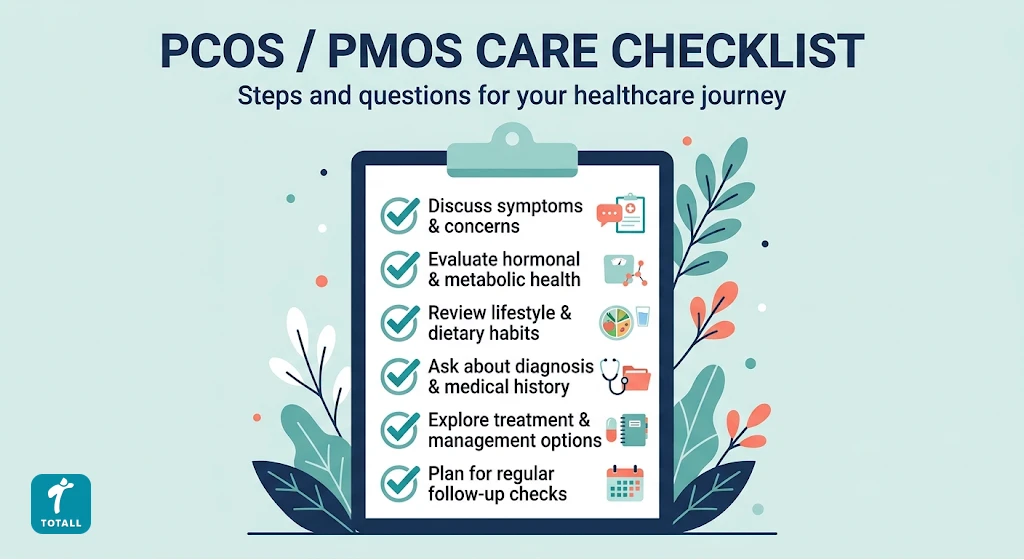
Rather than asking specifically about the name, the more useful conversation to have with your doctor is whether your current management plan is addressing the full picture the PMOS framing emphasises. Worth raising:
- Whether your metabolic health, insulin resistance, blood sugar, cholesterol, has been assessed as thoroughly as your reproductive symptoms
- Whether it’s been a while since your hormone levels or metabolic markers were rechecked
- Whether mental health and quality-of-life impacts, which the old framing often overlooked, are being discussed as part of your care, not just cycle and fertility questions
- Whether long-term monitoring for related risks, such as fatty liver disease or future diabetes, is part of your ongoing plan
These are genuinely useful questions prompted by the shift in thinking behind PMOS, even though none of them require the word “PMOS” to be said out loud to matter.
10. Frequently Asked Questions
Do I need a new diagnosis now that PCOS is called PMOS?
No. If you were previously diagnosed with PCOS, that diagnosis remains valid and current under the new name. No new testing is required because of the rename alone.
Will my medication or treatment plan change because of the rename?
Not directly. Existing evidence-based treatments for PCOS/PMOS remain unchanged. The rename may encourage broader attention to metabolic health over time, but it does not itself alter any specific treatment protocol.
Why does my prescription still say PCOS?
Because updating prescriptions, records and insurance systems worldwide takes years. Experts have said patients should expect to see PCOS on official paperwork for the foreseeable future, and this is expected, not an error.
Have the diagnostic criteria for PCOS or PMOS changed?
Not yet. The Rotterdam criteria remain the standard diagnostic framework. Whether these should evolve further is a separate, ongoing discussion among specialists, distinct from the naming change itself.
Should I ask my doctor to start calling it PMOS?
You can, but it isn’t necessary for your care. What matters more is whether your treatment plan addresses the full range of symptoms and risks the condition involves, regardless of which name your doctor currently uses.
11. Conclusion
The most important thing to take from the PMOS rename, if you already have a PCOS diagnosis, is that nothing about your actual health or care needs to change today because of it. What’s genuinely worth taking from it is the shift in thinking it represents, a nudge toward treating the condition as the whole-body hormonal and metabolic issue it actually is, rather than a narrow reproductive one. That’s a conversation worth having at your next appointment, with or without the new name attached to it. For more on the rename itself, see our guide on what PMOS actually means and why it happened, and for the practical symptoms and diagnosis picture, see our complete PCOS (PMOS) symptoms and diagnosis guide.
To review your own diagnosis, treatment plan, or metabolic health as part of your PCOS/PMOS care, book a consultation with TOTALL’s hormone and endocrine specialists in Indore, or call +919302443344.