
Medically reviewed by TOTALL Diabetes Hormone Institute, Indore.
A lot of what circulates about childhood weight in India is either dismissive (“baby fat, they’ll grow out of it”) or alarmist, built around BMI charts and language designed for adults. Neither serves parents well. Children’s bodies are still growing, which means the right reference charts, the right causes to look for, and the right response all differ meaningfully from adult obesity, covered in our main obesity guide. This guide is specifically about children, built around India’s own pediatric guidelines rather than adult BMI thresholds or charts developed for other populations.
How Childhood Obesity Is Actually Diagnosed in India
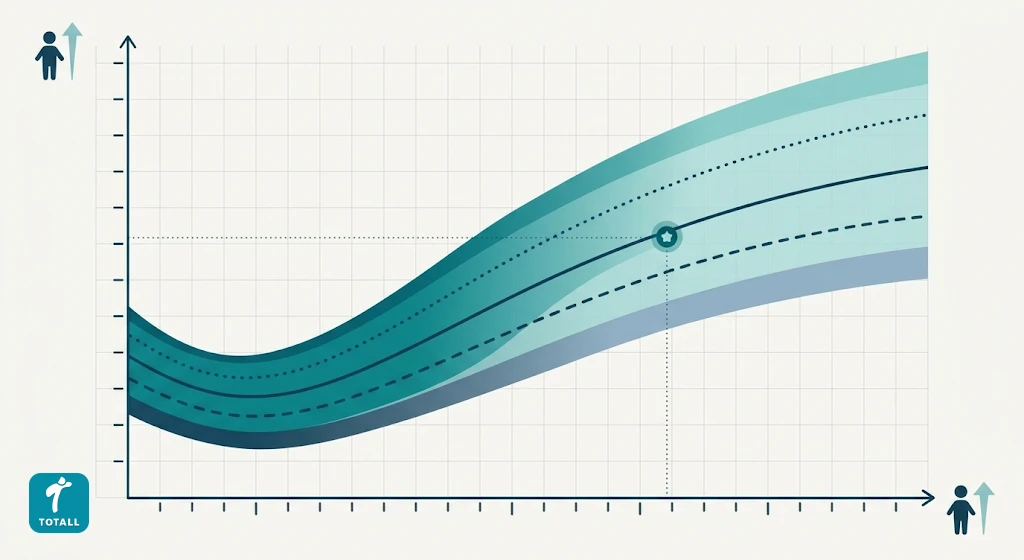
This is the detail most parent-facing content gets wrong: BMI alone, using an adult calculator, doesn’t apply to children, because healthy body fat naturally changes with age and differs by sex as children grow. The Indian Academy of Pediatrics (IAP), in its 2023 revised guidelines, sets out the reference standards used in Indian clinical practice: for children under 5 years, weight-for-height or weight-for-length using WHO growth charts; for children aged 5 to 18, BMI plotted against age- and sex-specific IAP 2015 growth charts, not adult cutoffs and not the CDC or WHO adolescent charts sometimes referenced in international content. A child’s BMI number only means something in the context of where it falls on the chart for their exact age and sex, which is why a home calculation without the correct chart isn’t reliable and a pediatrician’s assessment is the accurate way to check.
How Common Is Childhood Obesity in India?
The honest answer is that estimates vary considerably depending on the study, age group, region, and criteria used, and it’s worth being cautious of any single confident number. India’s Comprehensive National Nutrition Survey, the largest nationally representative dataset (though now several years old, collected 2016 to 2018), found overweight and obesity combined ranging from 1.6 percent in children aged 0 to 4 to 4.8 percent in adolescents aged 10 to 19, with meaningfully higher rates among children in wealthier households and urban areas. More recent regional and urban school-based studies, generally smaller and not nationally representative, have found considerably higher rates, in some cases exceeding 20 percent among urban adolescents, reflecting how much this varies by setting. Projections based on national trend data suggest India could account for roughly 11 percent of the global childhood obesity burden by 2030, and recent World Obesity Federation estimates rank India second globally by the number of children living with a high BMI.
What’s consistent across nearly every study, regardless of the exact percentage, is the direction and the driver: rates are rising, they’re higher in urban and higher-income households, and they track closely with rising ultra-processed food consumption, which by one government economic survey estimate grew from around 900 million dollars in retail value in 2006 to nearly 38 billion dollars by 2019.
What Causes Childhood Obesity
The reassuring starting point, per IAP guidelines, is that roughly 98 percent of childhood obesity has no underlying medical or genetic cause; it’s what’s termed exogenous or primary obesity, driven by the interaction of diet, activity, sleep, and environment, similar in principle to adult obesity but shaped by a child’s specific daily routine: school schedules, screen time, food available at home and school, and how much unstructured physical play a child actually gets. The remaining small share is secondary or syndromic obesity, linked to an underlying hormonal or genetic condition, and IAP guidelines specifically recommend that pediatricians distinguish between the two, since evaluation and management differ. Signs that warrant looking for a secondary cause include obesity combined with significantly short stature or slowed growth, developmental delay, or onset before age 5 with rapid progression; TOTALL’s pediatric hormone team evaluates conditions like this alongside related growth concerns such as short stature and delayed or abnormal puberty timing, which sometimes overlap with these less common causes.
Health Risks Specific to Children
Several risks associated with childhood obesity are the same processes seen in adults, arriving earlier: insulin resistance and, in some cases, prediabetes or type 2 diabetes, once considered rare before adulthood but increasingly diagnosed in adolescents; non-alcoholic fatty liver disease; and elevated blood pressure, which a cross-sectional study of Indian schoolchildren found associated with excess weight even in the 6-to-13 age range, and which tends to track into adulthood rather than resolving on its own. Obesity in children also carries orthopedic risks not typically seen in adults, including slipped capital femoral epiphysis, a hip growth-plate condition linked to excess weight during growth spurts, and can affect the timing of puberty. Equally important, and frequently underweighted compared to the physical risks, are the psychological and social effects: weight-based teasing and stigma in school settings are common and are associated with anxiety, low self-esteem, and disordered eating patterns, which is part of why how this topic is discussed with a child matters as much as the underlying weight itself.
What Parents Can Actually Do
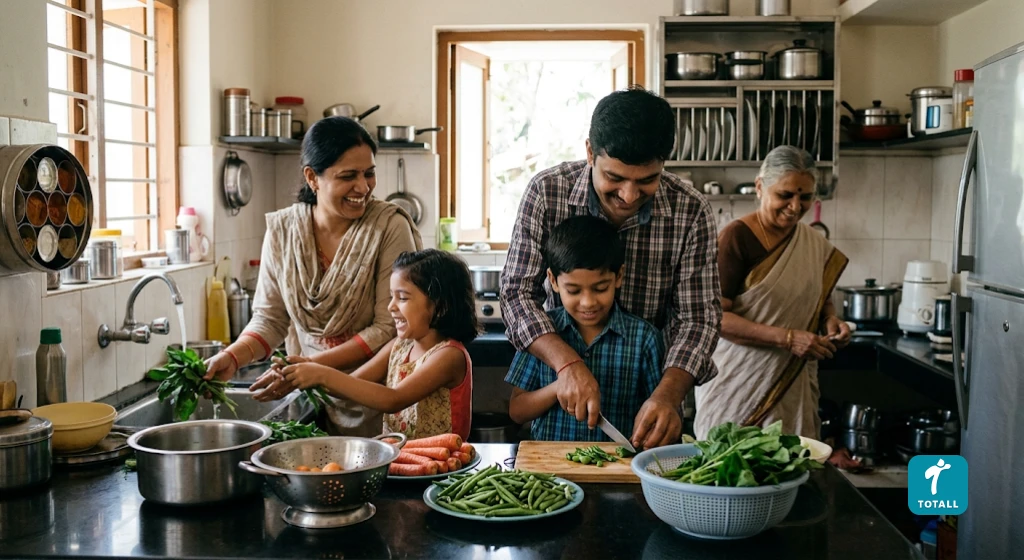
The single most important principle, and one that current pediatric guidelines are explicit about, is that childhood weight management is a family and behaviour change, not an individual diet imposed on one child. Putting a child on a calorie-restricted diet in isolation, especially without medical supervision, is generally discouraged, since it can affect normal growth and has been linked to disordered eating patterns later in life. What the evidence supports instead is changing the shared household environment for everyone, which helps the child without singling them out or attaching shame to food or body size.
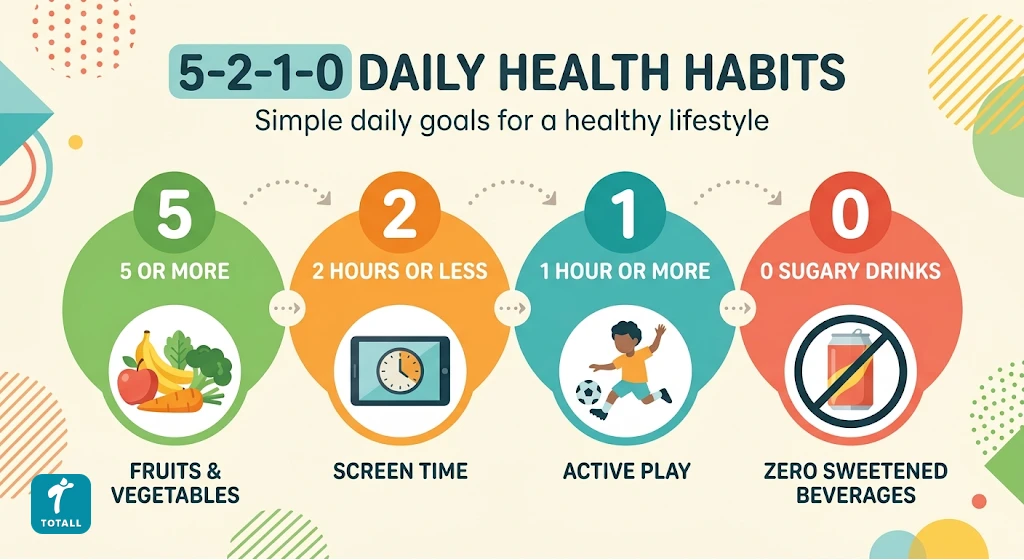
IAP’s prevention guidance uses a simple, practical framework sometimes called the “5-2-1-0” rule, adapted from a widely used pediatric health promotion model: aim for 5 servings of fruits and vegetables a day, no more than 2 hours of recreational screen time, at least 1 hour of physical activity, and 0 sugar-sweetened beverages. None of this requires special “diet food” or restrictive meal plans; it’s a shift in the default household pattern, applied consistently to the whole family rather than as a rule enforced on one child. Sleep is worth including alongside this, since insufficient sleep is independently linked with higher childhood obesity risk and is an easy factor to overlook.
Equally important is how weight is talked about at home. Avoiding comments that focus on a child’s body size or weight specifically, and instead talking about food and activity in terms of energy, strength, and enjoyment, reduces the risk of the shame and body-image harm that weight-focused language in childhood is associated with, without requiring parents to avoid the topic of health altogether.
When to See a Pediatrician
A pediatric evaluation is worth pursuing, rather than waiting, if a child’s BMI is tracking above the 85th percentile on the correct IAP or WHO chart for their age, if weight gain is rapid or seems disconnected from diet and activity, if there are signs of early puberty or slowed growth alongside excess weight, or if there’s a family history of diabetes, thyroid conditions, or early heart disease. Book a consultation with TOTALL’s endocrine team in Indore for a proper growth and metabolic evaluation, using the correct pediatric charts and, where indicated, screening for the metabolic changes described above, rather than relying on an adult BMI calculator or general online advice.
Frequently Asked Questions
How is childhood obesity diagnosed in India?
For children under 5, using WHO weight-for-height charts; for children aged 5 to 18, using BMI plotted against IAP 2015 age- and sex-specific growth charts. Adult BMI cutoffs and calculators don’t apply to children.
What percentage of childhood obesity in India has a medical cause?
According to Indian Academy of Pediatrics guidelines, roughly 98 percent of childhood obesity has no underlying medical or genetic cause and is linked instead to diet, activity, sleep, and environment. A small remaining share is linked to a hormonal or genetic condition and needs different evaluation.
Should I put my child on a diet to lose weight?
Isolated calorie-restrictive dieting for a child is generally discouraged without medical supervision, since it can affect growth and has been linked to disordered eating later. Current guidance favours family-wide changes to food and activity habits, applied to everyone in the household, rather than singling out one child’s diet.
What is the 5-2-1-0 rule?
A simple pediatric health framework recommending 5 servings of fruits and vegetables daily, no more than 2 hours of recreational screen time, at least 1 hour of physical activity, and 0 sugar-sweetened beverages, used as a practical, non-restrictive daily target for the whole family.
Can childhood obesity affect puberty?
Yes, excess weight in childhood can influence the timing of puberty, and can be linked with certain hormonal conditions in a small proportion of cases. If puberty seems notably early, late, or unusual alongside weight concerns, a pediatric hormone evaluation is worth pursuing.
How common is childhood obesity in India?
Estimates vary widely by study and setting; a large national nutrition survey found overweight and obesity combined ranging from under 2 percent in early childhood to under 5 percent in adolescence, while individual urban and regional studies have found considerably higher rates, sometimes over 20 percent, particularly in cities. Rates are rising overall and are consistently higher in urban and higher-income households.
Sources
- Khadilkar V, Shah N, Harish R, et al. — Indian Academy of Pediatrics Revised Guidelines on Evaluation, Prevention and Management of Childhood Obesity, Indian Pediatrics, 2023
- Sethi V, et al. — Prevalence of overweight and obesity and associated demographic and health factors in India: Findings from the Comprehensive National Nutrition Survey, Pediatric Obesity, 2024
- The Prevalence of Elevated Blood Pressure and Its Association With Obesity in Children Aged 6-13 Years in Rural India, Cureus, 2023
- UNICEF India — India: Overweight and obesity rising across all ages, 2025
- TOTALL — Complete guide to Obesity: Causes, Symptoms, Types and Treatment in India