Medically reviewed by TOTALL Diabetes Hormone Institute, Indore.
Two people can weigh exactly the same, have the same height, and even the same BMI, and carry very different amounts of health risk, because of where their body stores fat rather than how much of it there is overall. Belly fat specifically, and visceral fat in particular, the fat packed around the organs deep in the abdomen rather than just under the skin, is one of the more consistent predictors of metabolic and cardiovascular risk in the research, arguably more consistent than BMI alone. This guide covers how to measure it properly, what the numbers actually mean, and what the evidence supports for reducing it. For the full picture of obesity and its classification, see our main obesity guide, which covers waist circumference as part of the broader diagnostic picture; this article goes into more depth specifically on measurement and reduction.
Why Where Fat Is Stored Matters More Than How Much
Not all body fat behaves the same way. Subcutaneous fat, the layer just under the skin, is metabolically relatively inert. Visceral fat, wrapped around the liver, pancreas, and intestines, is different: it’s more metabolically active, releases inflammatory compounds and fatty acids directly into the bloodstream supplying the liver, and is consistently linked with insulin resistance, high blood pressure, and abnormal cholesterol, independent of total body weight. This is a large part of why two people with identical BMI can have very different health profiles, and why waist circumference, a practical proxy for how much visceral fat someone is likely carrying, has become a standard part of a proper obesity evaluation rather than an optional extra.
How to Measure Your Waist Circumference Correctly
Getting this right matters, since measuring at the wrong spot or over thick clothing gives a misleading number.
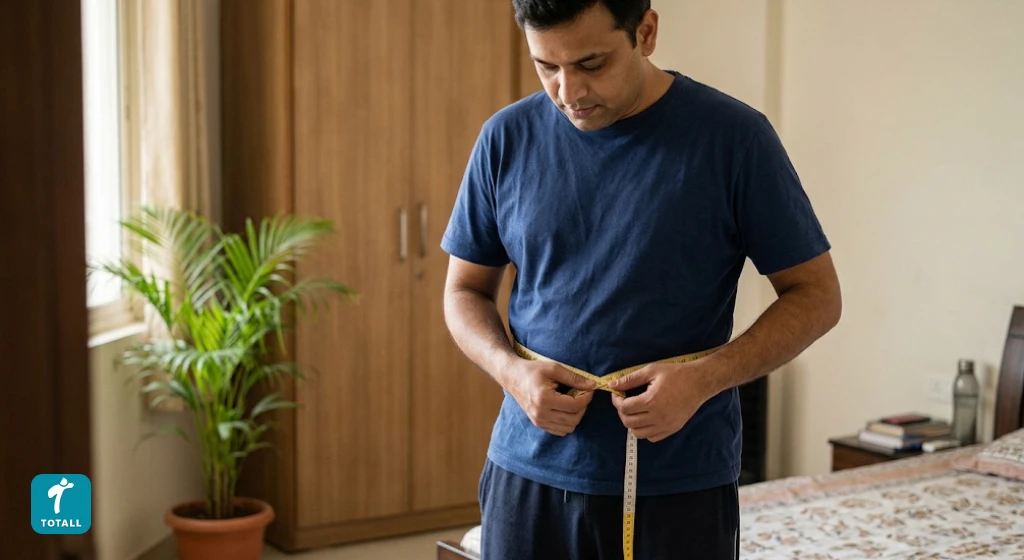
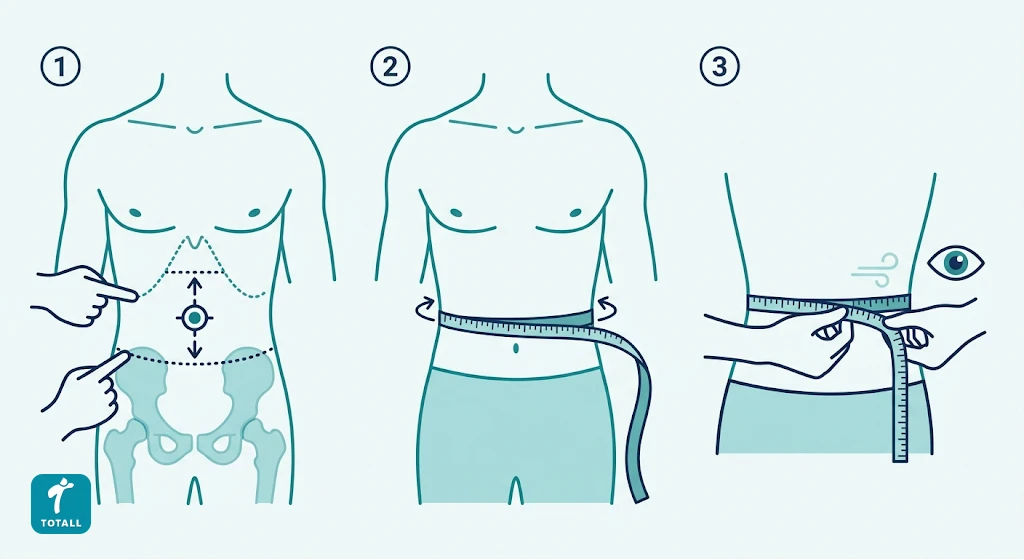
- Stand upright, feet together, and breathe out normally; don’t hold your breath or pull your stomach in.
- Locate the midpoint between the lower margin of your last palpable rib and the top of your hip bone (the iliac crest), on the side of your body.
- Wrap a flexible tape measure around this point, parallel to the floor, snug against the skin but not compressing it.
- Read the measurement at the end of a normal exhale.
For Asian Indian adults, a waist circumference of 90 cm or more in men, or 80 cm or more in women, is the clinical threshold used to identify abdominal obesity and increased metabolic risk, based on the Indian consensus classification covered in more detail in the main obesity guide.
Waist-to-Hip Ratio: Another Useful Number
Waist-to-hip ratio (WHR) divides your waist measurement by your hip measurement (the widest point around your buttocks, using the same units for both). The World Health Organization uses a cutoff of 0.90 or above in men and 0.85 or above in women to flag substantially increased cardiometabolic risk. WHR captures something waist circumference alone doesn’t: two people with the same waist size but different hip sizes carry different relative risk, since a smaller hip measurement relative to the waist points toward a more “apple-shaped” fat distribution, generally the higher-risk pattern, compared to a “pear-shaped” distribution where more fat sits on the hips and thighs.
Waist-to-Height Ratio: The Simplest Single Number
Waist-to-height ratio (WHtR), your waist measurement divided by your height in the same units, has an advantage over both waist circumference and WHR: it doesn’t need separate cutoffs for men and women, and works reasonably well across different heights. A ratio above 0.5, meaning your waist is more than half your height, is a widely used screening threshold, and it’s also the specific cutoff incorporated into the 2025 Indian obesity staging framework covered in the main obesity guide’s classification section. For a person 165 cm tall, that means keeping the waist under roughly 82.5 cm.
| Measurement | What it needs | Risk threshold |
|---|---|---|
| Waist circumference | Tape measure only | 90 cm (men) / 80 cm (women), Indian classification |
| Waist-to-hip ratio | Waist and hip measurement | 0.90 (men) / 0.85 (women), WHO |
| Waist-to-height ratio | Waist measurement and height | Above 0.5 |
Can You Actually Reduce Belly Fat Specifically?
Here’s the part that disappoints a lot of people: you cannot choose to lose fat from one specific area of your body through targeted exercise. Doing hundreds of daily crunches will strengthen your abdominal muscles, which is worthwhile for other reasons, but it will not preferentially burn the fat covering them; this “spot reduction” idea has been tested directly in exercise science research and consistently doesn’t hold up. Fat loss from a calorie deficit happens across the body according to your own genetics and hormonal patterns, not according to which muscles you’ve been exercising.
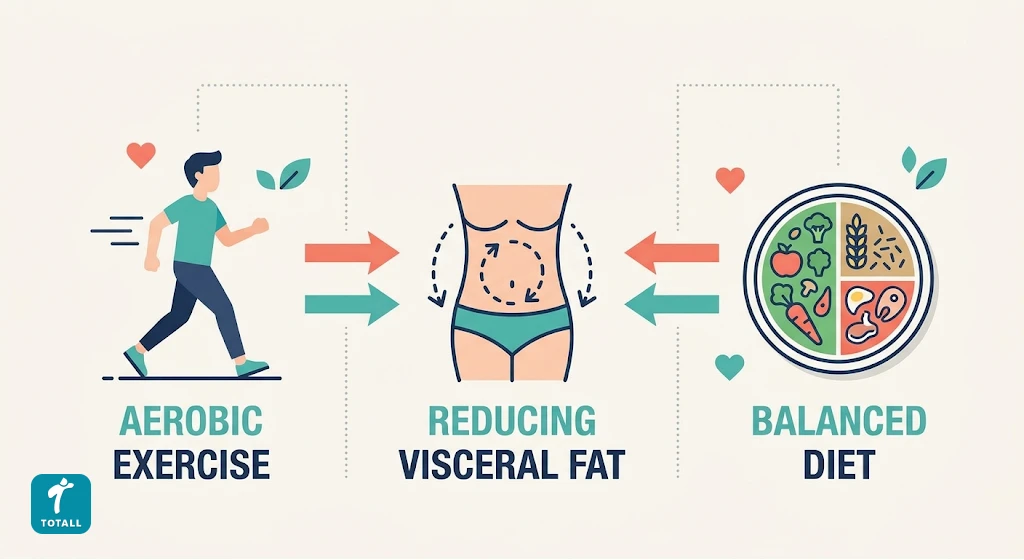
There is, however, a genuinely encouraging related finding: visceral fat specifically tends to respond well, often disproportionately well compared to fat elsewhere, to a general fat-loss approach, meaning that with overall weight loss, many people lose a meaningful share of it from the abdomen first. Regular aerobic exercise in particular has been shown in multiple studies to reduce visceral fat specifically, in some cases even without dramatic overall weight loss, which makes it a useful tool independent of the number on the scale. Combining aerobic activity with resistance training, adequate protein, and a moderate sustainable calorie deficit, the same general approach covered in TOTALL’s guide to evidence-based weight loss in India, remains the best-supported approach for reducing visceral fat specifically, rather than any exercise or food marketed as a targeted “belly fat” solution.
Stress, Sleep, and Cortisol
Chronic stress and poor sleep both raise cortisol, a hormone that, among its other effects, promotes fat storage preferentially in the abdominal region. This doesn’t mean stress alone causes abdominal obesity, diet and activity still matter far more, but it’s a genuine contributing factor that’s easy to overlook, and addressing sleep quality and stress levels is a legitimate, evidence-supported part of a plan focused on reducing central fat specifically, not just a wellness platitude.
When to Get Evaluated
If your waist circumference is at or above the 90/80 cm threshold, your waist-to-hip ratio is at or above 0.90/0.85, or your waist-to-height ratio exceeds 0.5, it’s worth a proper evaluation rather than just tracking the number yourself, particularly if you also have a family history of diabetes or heart disease. Book a consultation with TOTALL’s endocrine team in Indore for metabolic blood work alongside an accurate measurement, since abdominal fat’s health impact is best assessed together with blood sugar, lipid, and blood pressure readings, not the tape measure alone.
Frequently Asked Questions
Why is belly fat worse than fat elsewhere?
Visceral fat, the fat around the abdominal organs, is more metabolically active than fat stored elsewhere, releasing inflammatory compounds and fatty acids that affect the liver directly. It’s consistently linked with insulin resistance, high blood pressure, and abnormal cholesterol, independent of total body weight.
Can you spot-reduce belly fat with ab exercises?
No. Targeted exercise strengthens the muscles underneath but doesn’t preferentially burn fat in that specific area; this has been tested directly in research and doesn’t hold up. Overall fat loss through a calorie deficit, combined with regular aerobic exercise, is the evidence-based approach, and visceral fat specifically does tend to respond well to it.
What is a healthy waist-to-hip ratio?
The World Health Organization uses a cutoff of below 0.90 for men and below 0.85 for women as indicating lower cardiometabolic risk; ratios at or above these figures indicate a higher-risk, more centrally distributed fat pattern.
What is a healthy waist size for Indians?
Under the Indian clinical classification, a waist circumference below 90 cm for men and below 80 cm for women is considered within the lower-risk range. These thresholds are lower than the general international standard, reflecting elevated metabolic risk at a given waist size in Indian populations.
Does stress cause belly fat?
Chronic stress and poor sleep raise cortisol, which promotes fat storage preferentially in the abdominal area. It’s a genuine contributing factor, though diet and physical activity remain more significant overall drivers of abdominal fat.
Sources
- Misra A, Chowbey P, Makkar BM, et al. — Consensus Statement for Diagnosis of Obesity, Abdominal Obesity and the Metabolic Syndrome for Asian Indians, Journal of the Association of Physicians of India, 2009
- Waist-Hip Ratio, World Health Organization cutoff reference, ScienceDirect Topics overview
- Misra A, Vikram NK, Ghosh A, et al. — Revised definition of obesity in Asian Indians living in India, Diabetes & Metabolic Syndrome: Clinical Research & Reviews, 2025
- TOTALL — Complete guide to Obesity: Causes, Symptoms, Types and Treatment in India