Medically reviewed by TOTALL Diabetes Hormone Institute, Indore.
Bariatric surgery is one of the most searched, and least accurately explained, obesity treatments in India. Search results are dominated by hospital marketing pages quoting a single “starting from” price and a vague BMI cutoff, and the reality is more layered: India actually has its own professional society with its own eligibility criteria, a separate and stricter set of insurance rules that frequently leaves clinically eligible patients unable to claim coverage, and several distinct procedures with meaningfully different results and risk profiles. This guide covers all of that as accurately as the current published guidance allows, and is more cautious with numbers than most sources you’ll find, since remission and weight-loss figures vary a great deal depending on which study and which definition is used. For the broader picture of obesity and its non-surgical treatment options, see our main obesity guide.
What Bariatric Surgery Actually Does
Bariatric surgery, also called metabolic or weight-loss surgery, alters the digestive system to reduce how much food the stomach can hold, and in some procedures, how much of it the body absorbs. It isn’t just mechanical portion control. These procedures also change the levels of gut hormones involved in hunger and blood sugar regulation, including ghrelin and GLP-1, which is a large part of why bariatric surgery tends to improve type 2 diabetes independently of weight loss alone, and why it’s increasingly called “metabolic surgery” rather than purely weight-loss surgery in current clinical literature.
Types of Bariatric Surgery Performed in India
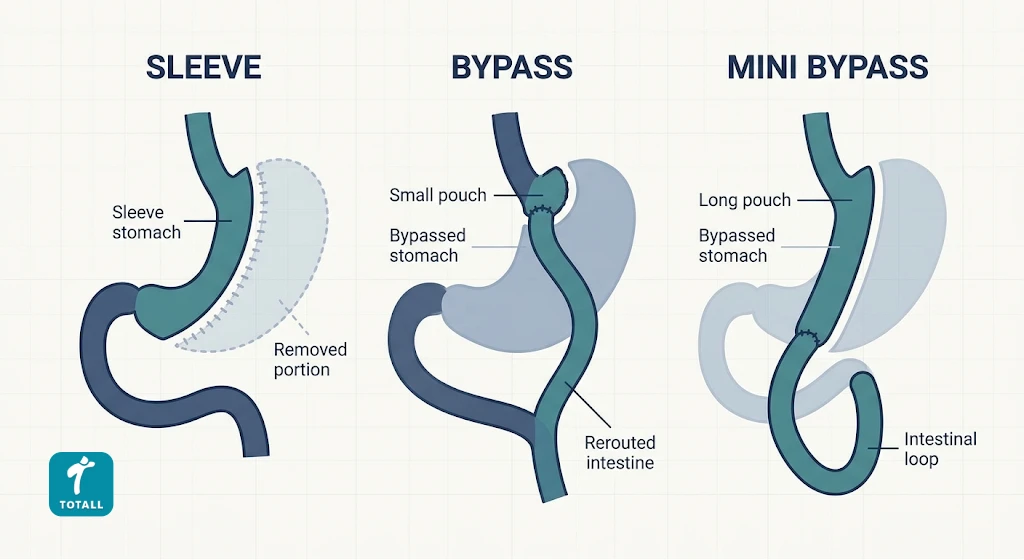
Sleeve Gastrectomy
The most commonly performed bariatric procedure in India and globally. The surgeon removes roughly 75 to 80 percent of the stomach, leaving a narrow, banana-shaped pouch. This limits food intake and removes most of the stomach’s ghrelin-producing tissue, reducing hunger. It doesn’t reroute the intestines, which generally means a simpler procedure, a lower risk of certain nutritional deficiencies compared to bypass procedures, and no reversal option, since the removed stomach tissue is gone permanently.
Roux-en-Y Gastric Bypass (RYGB)
The surgeon creates a small stomach pouch, roughly egg-sized, and connects it directly to the middle portion of the small intestine, bypassing the rest of the stomach and the first section of the small intestine (the duodenum). This limits intake and reduces calorie and nutrient absorption. It’s considered particularly effective for diabetes remission and for patients with significant acid reflux, though it requires more careful long-term vitamin and mineral monitoring than sleeve gastrectomy.
One-Anastomosis (Mini) Gastric Bypass (OAGB)
A technically simpler variation of gastric bypass, using a single new connection rather than two, which shortens operating time. It has grown rapidly in popularity in India in recent years and shows diabetes remission and weight-loss outcomes broadly comparable to standard RYGB in current studies, though it remains a comparatively newer procedure with a shorter long-term evidence base than sleeve gastrectomy or RYGB.
Adjustable Gastric Banding and Biliopancreatic Diversion with Duodenal Switch (BPD/DS)
Gastric banding, once common, has fallen out of favour in most Indian centres due to comparatively weaker long-term weight loss and diabetes remission results and a higher rate of band-related complications requiring revision. BPD/DS produces the most dramatic weight loss and diabetes remission of any bariatric procedure but carries a substantially higher risk of long-term nutritional deficiency, and is generally reserved for a small number of patients with very severe obesity under specialist care.
Who Is Eligible for Bariatric Surgery in India?
This is the section where a lot of Indian bariatric content gets vague, or simply repeats a Western BMI number that doesn’t reflect what’s actually practised here. India’s own professional body, the Obesity and Metabolic Surgery Society of India (OSSI), officially upholds the 2011 IFSO Asia-Pacific Chapter consensus criteria for patient selection:
- A BMI of 35 or above, with or without complications
- A BMI of 30 or above, specifically for type 2 diabetes or metabolic syndrome that hasn’t responded adequately to lifestyle change and medical treatment
- A BMI of 27.5 or above may be considered only as a non-primary option for uncontrolled diabetes or metabolic syndrome, and strictly under research-study conditions with informed consent and ethics committee approval, not as routine practice
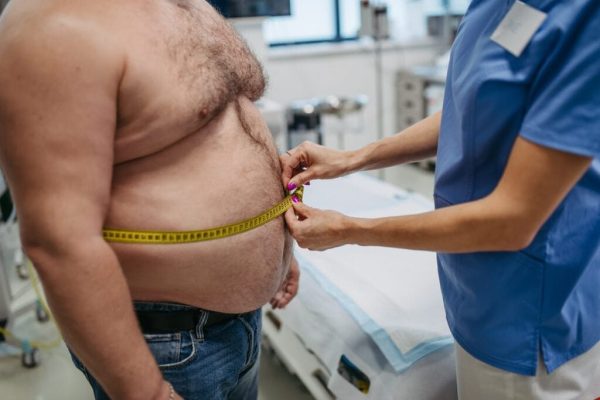
OSSI additionally recognises a waist circumference of 90 cm or more in men, or 80 cm or more in women, together with obesity-related complications, as a qualifying criterion in its own right, separate from BMI. It’s worth knowing that a newer 2022 global guideline from ASMBS and IFSO proposes considerably lower Asian-adjusted thresholds still (clinical obesity from a BMI of 25, surgery “should be offered” from 27.5). This guideline exists and is influential internationally, but a subsequent 2025 review of the evidence behind it found that the 27.5 threshold was primarily supported by studies in patients who also had type 2 diabetes, and cautioned against applying it to any Asian patient with obesity regardless of metabolic status. As of this writing, OSSI’s own published guidance for Indian practice has not adopted this lower global figure, so most Indian centres, TOTALL included, continue to apply the 35/30 framework as the standard, reserving lower BMI thresholds for patients with significant, specifically defined metabolic disease and only after careful individual evaluation.
Insurance Coverage: A Real Gap Worth Knowing About Before You Plan Around It
The Insurance Regulatory and Development Authority of India (IRDAI) mandated that health insurers cover medically necessary bariatric surgery starting October 2019, formalised further in a 2020 master circular. However, IRDAI’s own coverage criteria are stricter than OSSI’s clinical eligibility criteria described above, which creates a real gap for some patients:
- A BMI of 40 or above qualifies for coverage regardless of other conditions
- A BMI of 35 to 39.9 qualifies only alongside specific severe complications: obesity-related cardiomyopathy, coronary heart disease, severe obstructive sleep apnea, or uncontrolled type 2 diabetes, and only after documented failure of non-surgical weight-loss methods
- Cosmetic procedures are excluded entirely, and most policies carry a waiting period of two to four years before bariatric coverage activates
This means a patient who is clinically eligible for surgery under OSSI’s own 30-to-35 BMI range with diabetes may still not qualify for insurance coverage under IRDAI’s stricter threshold. This isn’t a hypothetical concern: a 2024 to 2025 OSSI-led survey of 109 bariatric surgeons across India found that roughly a third reported insurance claim denial rates between 50 and 75 percent, and over 90 percent described the insurance process for bariatric surgery as more difficult than for routine surgery, most often due to obesity-related exclusions, waiting periods, and documentation disputes. The practical takeaway: get written confirmation of what your specific policy covers, and at what BMI and comorbidity threshold, before assuming a quoted “cashless” or “insurance-covered” price will apply to your case.
The Pre-Surgical Evaluation Process
Reputable centres don’t move straight from a BMI number to an operating table. A proper pre-surgical work-up typically includes a detailed metabolic and hormonal evaluation (the same blood work described in the main obesity guide’s diagnosis section), an endoscopy to check the stomach and oesophagus, a psychological evaluation to assess readiness for the significant, permanent lifestyle change surgery requires, a dietitian consultation to establish pre- and post-operative nutrition planning, and, depending on individual risk factors, cardiac and pulmonary clearance. This process usually takes several weeks, not days, and a centre that skips most of this in favour of a fast-tracked surgery date is worth being cautious about.
What to Expect: Procedure, Hospital Stay, and Recovery
Most bariatric procedures in India today are performed laparoscopically (through small incisions rather than open surgery), which generally means less pain, a shorter hospital stay, and faster return to normal activity than older open techniques. Typical hospital stay is 2 to 4 days for sleeve gastrectomy or gastric bypass, assuming no complications. Most patients return to light daily activity within 1 to 2 weeks and to full normal activity, including exercise, within 4 to 6 weeks, though this varies by procedure and individual recovery. Diet progresses in structured stages after surgery, from clear liquids, to pureed food, to soft food, to a modified solid diet over roughly 6 to 8 weeks, under a dietitian’s guidance rather than personal judgement, since eating too much too soon in the early weeks carries real risk of complications.
What Results Are Realistic?
Weight-loss and diabetes-remission figures vary considerably across studies depending on the procedure, the follow-up duration, and how “remission” is defined, and it’s worth being wary of any source quoting a single confident percentage without those details attached.
On weight loss: gastric bypass and OAGB generally produce somewhat greater excess weight loss than sleeve gastrectomy in most published comparisons, though sleeve gastrectomy still produces substantial, durable results for most patients. Individual results vary widely based on starting weight, adherence to post-surgical nutrition and activity guidance, and follow-up care.
On type 2 diabetes remission: this is genuinely one of the strongest evidence bases in obesity medicine, but the exact number depends heavily on the study. Several large studies and meta-analyses report diabetes remission in roughly half to over 80 percent of patients in the first one to three years after surgery, with gastric bypass and OAGB generally outperforming sleeve gastrectomy, and sleeve gastrectomy outperforming older gastric banding. Remission rates decline over longer follow-up in most long-term studies (one widely cited cohort found remission fell from around 72 percent at two years to roughly 30 percent at fifteen years), which is a meaningful, honest caveat: durable, but not always permanent for every patient, and dependent partly on how long someone had diabetes and how well-controlled it was before surgery.
Risks and Complications
Bariatric surgery carries the general risks of any major abdominal surgery (bleeding, infection, blood clots, anaesthesia-related risk) alongside procedure-specific risks: staple-line or anastomotic leaks, strictures narrowing the digestive passage, and, particularly with bypass-type procedures, long-term vitamin and mineral deficiencies (commonly B12, iron, calcium, and vitamin D) that require lifelong monitoring and supplementation. Dumping syndrome, a cluster of symptoms including nausea, cramping, and rapid heartbeat after eating sugary or high-fat food, is common after bypass-type procedures and is generally managed through dietary adjustment. Serious complication rates at experienced, high-volume centres are low, which is part of why choosing a centre with substantial procedure volume and a full multidisciplinary team matters as much as choosing a specific procedure.
Life After Bariatric Surgery
Surgery changes the digestive system, not the need for ongoing management. Lifelong vitamin and mineral supplementation is standard after bypass-type procedures and often recommended after sleeve gastrectomy as well. Regular follow-up blood work, typically every few months in the first year and at least annually after that, catches nutritional deficiencies before they cause symptoms. Protein intake becomes a specific, deliberate focus in the early months to preserve muscle mass during rapid weight loss. Most centres also recommend ongoing dietitian and, where needed, psychological support, since the biggest determinant of long-term success is sustained behaviour change, not the operation itself.
Bariatric Surgery Cost in India
| Procedure | Approximate cost range (INR) |
|---|---|
| Sleeve Gastrectomy | ₹2,50,000 – ₹4,50,000 |
| Roux-en-Y Gastric Bypass | ₹3,50,000 – ₹6,00,000 |
| One-Anastomosis (Mini) Gastric Bypass | ₹3,00,000 – ₹5,00,000 |
| Revision Surgery | ₹2,50,000 – ₹5,00,000 |
These are indicative ranges only; actual cost depends on the hospital, city, surgeon, procedure complexity, and whether insurance coverage applies. Costs typically include the surgery itself, hospital stay, anaesthesia, and immediate post-operative care, but confirm what’s included and what’s billed separately (dietitian follow-up, supplements, revision cover) before committing. Given the insurance gap described above, get a written cost estimate for both the insured and self-pay scenario before scheduling.
When Is It Worth Discussing Surgery With a Doctor?
Surgery is generally worth discussing, not necessarily pursuing immediately, if your BMI is 35 or above, or 30 or above with poorly controlled type 2 diabetes or metabolic syndrome, and structured lifestyle change and, where appropriate, medical treatment such as GLP-1 therapy (covered in TOTALL’s Semaglutide guide) haven’t produced adequate or durable results. Book a consultation with TOTALL’s endocrine and obesity-medicine team in Indore for a full evaluation; surgical referral, where appropriate, happens after a proper metabolic work-up, not as a first conversation.
Frequently Asked Questions
What is the BMI requirement for bariatric surgery in India?
India’s professional society, OSSI, follows the 2011 IFSO Asia-Pacific criteria: a BMI of 35 or above generally, or 30 or above specifically for inadequately controlled type 2 diabetes or metabolic syndrome. Lower thresholds exist in specific research contexts but aren’t standard routine practice in India.
Does insurance cover bariatric surgery in India?
IRDAI has mandated coverage for medically necessary bariatric surgery since 2019, but coverage criteria (generally BMI 40 or above, or 35 to 39.9 with specific severe complications) are stricter than the clinical eligibility criteria surgeons use, and claim denials remain common in practice. Confirm your specific policy’s terms before assuming coverage.
How much does bariatric surgery cost in India?
Sleeve gastrectomy typically costs roughly ₹2.5 to ₹4.5 lakh, and gastric bypass roughly ₹3.5 to ₹6 lakh, varying by hospital, city, and individual case complexity. Get a written, itemised quote rather than relying on an advertised “starting from” figure.
Which is better, gastric sleeve or gastric bypass?
Neither is universally “better.” Sleeve gastrectomy is technically simpler with a somewhat lower long-term nutritional-deficiency risk. Gastric bypass and mini gastric bypass generally show somewhat stronger results for diabetes remission and severe acid reflux, but require more intensive long-term nutritional monitoring. The right choice depends on individual health factors, decided with a surgeon during evaluation, not a generic ranking.
Can bariatric surgery cure type 2 diabetes?
Bariatric surgery can produce diabetes remission in a substantial proportion of patients, commonly cited in the range of roughly half to over 80 percent in the first few years depending on the procedure and study, but remission rates decline over longer follow-up in many patients, and “remission” isn’t the same as a permanent cure. It’s best understood as a powerful treatment that can significantly reduce or eliminate the need for diabetes medication for an extended period, not a guaranteed permanent fix.
How long is the recovery after bariatric surgery?
Most patients stay in hospital 2 to 4 days, return to light activity within 1 to 2 weeks, and reach full normal activity within 4 to 6 weeks, though this varies by procedure and individual health.
Sources
- Obesity and Metabolic Surgery Society of India (OSSI) — Guidelines for Patient and Procedure Selection for Bariatric and Metabolic Surgery, Obesity Surgery, 2020
- Kasama K, Mui W, Lee WJ, et al. — IFSO-APC Consensus Statements 2011, Obesity Surgery, 2012
- Eisenberg D, Shikora SA, Aarts E, et al. — 2022 ASMBS/IFSO Indications for Metabolic and Bariatric Surgery
- Clarifying the 2022 IFSO/ASMBS Metabolic and Bariatric Surgery Guidelines for Asians: Safeguarding Against Misapplication, Obesity Surgery, 2025
- Type 2 diabetes remission following contemporary bariatric surgical procedures: a population-based matched cohort study
- Prediction of Type 2 Diabetes Remission after Bariatric or Metabolic Surgery (remission decline over long-term follow-up)
- TOTALL — Complete guide to Obesity: Causes, Symptoms, Types and Treatment in India