

Medically reviewed by TOTALL Diabetes Hormone Institute, Indore.
Obesity is one of the most searched health terms in India, and also one of the most misunderstood. Most people arrive at this question after a doctor has mentioned their weight during an unrelated visit, after a relative has been diagnosed with diabetes or heart disease, or after months of frustration with diets that stopped working. The confusion is understandable: obesity gets talked about as a willpower problem in everyday conversation and treated as a chronic metabolic disease in medical literature, and those two framings lead to very different advice.
This guide takes the second view, because it is the one supported by evidence. It walks through what obesity actually is, how it is measured and classified in India specifically (the Indian cutoffs are lower than the global standard, for reasons explained below), what causes it, what it does to the body over time, and the realistic range of treatment options available today, from lifestyle change through to hormone-based medicine and surgery. Where a claim needs a source, it is cited. Where the honest answer is “it depends,” this guide says so rather than oversimplifying.
1. What Is Obesity?
Obesity is a chronic medical condition defined by an excess accumulation of body fat that is significant enough to increase the risk of other health problems. It is not simply a description of how someone looks. Two people can weigh the same and have very different amounts of body fat, muscle, and visceral (internal, around-the-organs) fat, and it is the excess fat itself, particularly where it is stored, that drives disease risk, not the number on a scale by itself.
Major medical bodies, including the World Health Organization, describe obesity as a chronic, relapsing disease in its own right, arising from complex interactions between genetics, neurobiology, eating behavior, and environment, not merely a risk factor for other diseases or a lifestyle choice. That distinction matters clinically: it means obesity is generally eligible for structured, ongoing medical management rather than being treated as something outside a doctor’s scope.
Obesity vs Overweight: What Is the Difference?
Overweight and obesity sit on the same spectrum but are not the same thing. Overweight describes a body weight above what is considered healthy for a given height, while obesity describes a more advanced degree of excess fat associated with a meaningfully higher risk of complications. In practical terms, both are measured using the same tools (BMI and waist circumference), just at different thresholds, which are covered in the next section.
2. How Obesity Is Measured: BMI, Waist Circumference, and Why Indian Cutoffs Are Lower
Body Mass Index, or BMI, remains the most widely used screening tool for obesity because it is quick to calculate from just height and weight: weight in kilograms divided by height in metres squared. It is a screening tool, not a diagnosis. BMI does not distinguish between muscle and fat, so a very muscular person can have a “high” BMI without excess body fat, and it does not tell you where fat is stored, which matters more for health risk than total body fat alone.
This is where India-specific classification becomes important, and it is a detail most generic health content gets wrong by defaulting to Western cutoffs. The standard WHO classification, developed largely from European population data, sets overweight at a BMI of 25 and obesity at 30. Research across multiple Asian populations, including large Indian cohort studies, has consistently found that Indians and other South Asians develop diabetes, high blood pressure, and cardiovascular disease at meaningfully lower BMI levels than these Western thresholds suggest, largely because Indian bodies tend to carry a higher percentage of body fat, and more of it viscerally, at the same BMI as a European body.
Because of this, two related but distinct Indian frameworks exist, and it matters which one a given source is using. The traditional 2009 Asian-Indian consensus statement, still the most widely used in Indian clinical practice today, defines a BMI of 23 to 24.9 as overweight and 25 or above as obese, roughly two points lower than the global standard at the overweight threshold and five points lower at the obesity threshold specifically, not a uniform gap across every category. A newer 2025 Indian consensus goes further, moving beyond a BMI-only definition entirely to stage obesity using adiposity, waist measurements, and functional impact together, covered in Section 3 below.
| Category | Global (WHO) BMI | Asian Indian BMI |
|---|---|---|
| Underweight | Below 18.5 | Below 18.5 |
| Normal weight | 18.5 – 24.9 | 18.5 – 22.9 |
| Overweight | 25 – 29.9 | 23 – 24.9 |
| Obese | 30 and above | 25 and above |
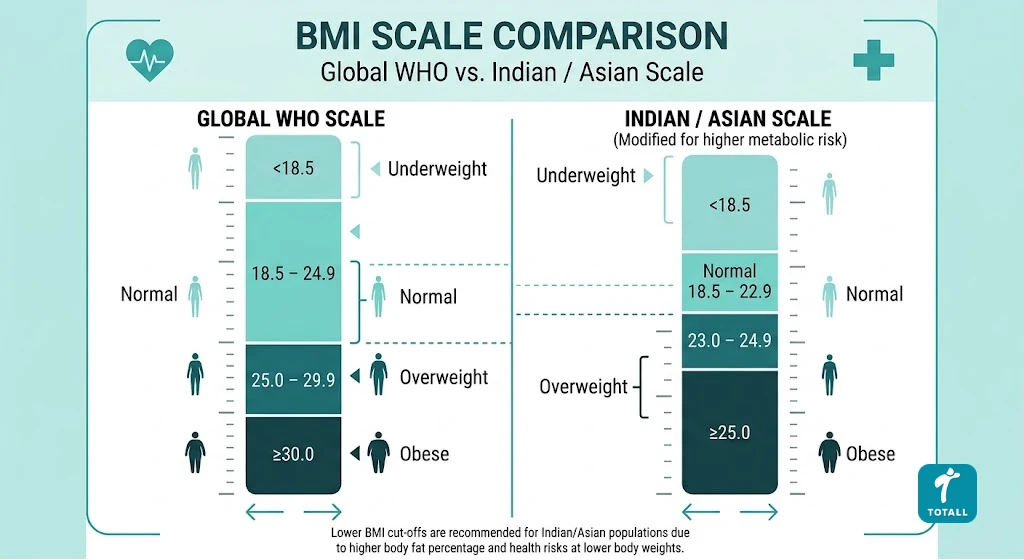
Practically, this means someone with a BMI of 26 might be reassured they are “just a bit overweight” by a calculator built on Western data, when by the classification that actually applies to Indian bodies, they are already in the obese range and worth a proper metabolic evaluation. Under the World Health Organization’s International Classification of Diseases, obesity is coded as ICD-10 E66, with more specific sub-codes for obesity due to excess calories, drug-induced obesity, and morbid obesity with alveolar hypoventilation; your doctor will use the code relevant to your specific diagnosis on prescriptions and insurance paperwork.
Obesity in Indian Languages
Since a large share of Indians search for this topic in their own language, here is what “obesity” is commonly called across major Indian languages, useful if you are translating a diagnosis for family members or searching for further reading:
| Language | Term |
|---|---|
| Hindi | मोटापा (Motapa) |
| Tamil | பருமன் (Parumaṉ) |
| Telugu | స్థూలకాయం (Sthūlakāyaṁ) |
| Bengali | স্থূলতা (Sthūlatā) |
| Marathi | लठ्ठपणा (Laṭhṭhapaṇā) |
| Kannada | ಬೊಜ್ಜು (Bojju) |
| Malayalam | അമിതവണ്ണം (Amithavannam) |
| Gujarati | સ્થૂળતા (Sthūḷatā) |

The medical definition and health risks described in this guide apply regardless of which language you use to describe the condition; the underlying clinical picture, and TOTALL’s evaluation process, is the same. Note: these are commonly used general terms for obesity in each language; formal medical terminology and everyday colloquial usage can both vary by region, and this table has not been independently verified by native-language medical reviewers, so please flag any corrections before publishing.
Waist Circumference Provides Information BMI Cannot
Because visceral fat, the fat stored around the abdominal organs, is more metabolically active and linked to diabetes and heart disease, doctors increasingly look at waist circumference alongside BMI, sometimes even when BMI itself looks acceptable. The clinical threshold used in Indian and Asian-specific guidelines, including the ICMR-INDIAB study, defines abdominal obesity as a waist circumference of 90 cm (about 35.4 inches) or more in men, and 80 cm (about 31.5 inches) or more in women, regardless of overall BMI. It’s worth knowing that not every published study on Indian waist circumference uses this same threshold: a widely cited National Family Health Survey-5 (NFHS-5) analysis, referenced later in this guide, used a higher cutoff of 94 cm for men (closer to the international IDF/European threshold) alongside 80 cm for women, so figures from different sources aren’t always directly comparable unless the underlying definition is checked.
This distinction has real consequences. Using the 90/80 cm clinical thresholds, the ICMR-INDIAB study found abdominal obesity considerably more common than BMI-defined obesity nationally, particularly among women, meaning a large number of people carry meaningful health risk from central fat accumulation even while their overall BMI looks unremarkable. Waist-to-height ratio, calculated by dividing waist circumference by height, is used by some clinicians as an additional check, with a ratio above 0.5 generally flagged for further evaluation.
3. Classes and Stages of Obesity
Within the obese range itself, doctors further divide obesity into classes based on how high the BMI is, because health risk rises meaningfully at each step up.
| Class | Global BMI Range | Common Clinical Description |
|---|---|---|
| Class 1 | 30 – 34.9 | Moderate obesity |
| Class 2 | 35 – 39.9 | Severe obesity |
| Class 3 | 40 and above | Very severe or “morbid” obesity |
“Morbid obesity” is the older clinical term still commonly searched and used informally; most current guidelines prefer “Class 3 obesity” or “severe obesity” since “morbid” can read as stigmatising without adding clinical precision. There is no officially recognised “class 4” in mainstream classification systems, though some bariatric surgery literature uses the term “super obesity” informally for BMI above roughly 50. It’s worth being clear that this Class 1/2/3 system, the traditional 23/25 Asian-Indian BMI cutoffs, and the newer staging framework described below are three related but distinct ways of describing obesity, not competing numbering systems for the same thing, and different sources may use any one of them.
In January 2025, a global expert group, the Lancet Diabetes & Endocrinology Commission on clinical obesity, proposed a significant shift in how obesity is defined: it distinguishes “preclinical obesity” (excess adiposity with no organ or functional damage yet) from “clinical obesity” (excess adiposity that has already caused measurable harm). A parallel Indian paper led by Dr Anoop Misra and Dr Naval Vikram, Revised definition of obesity in Asian Indians living in India, applies similar thinking specifically to Indian patients, using a two-stage system: Stage 1 is increased adiposity (BMI above 23) without organ or functional impairment, while Stage 2 adds excess waist circumference or waist-to-height ratio plus either symptoms, functional limitations, or a related disease, such as type 2 diabetes or knee osteoarthritis. The practical shift for patients is that BMI remains a useful screening measure, but it is no longer treated as sufficient on its own to establish whether obesity is clinically affecting organs or function; treatment decisions increasingly weigh adiposity, symptoms, and related disease alongside the BMI number rather than the number alone.
4. What Causes Obesity?
Obesity is rarely caused by a single factor, and framing it purely as “eating too much and moving too little” misses most of the clinical picture. The honest explanation is that body weight is regulated by a complex system involving genetics, hormones, gut signalling, the brain’s appetite centres, sleep, stress, medications, and the food environment a person lives in, and any of these can push the system toward weight gain.
Metabolic and Hormonal Causes
Several hormonal conditions directly promote weight gain or make weight loss unusually difficult, and identifying them changes the treatment plan considerably.
- Hypothyroidism. An underactive thyroid can contribute to weight gain, fatigue, and cold intolerance, but on its own it usually does not explain severe obesity; the weight gain directly attributable to hypothyroidism is typically modest, often in the range of a few kilograms, partly from fluid retention. Thyroid testing is a simple, appropriate step when symptoms or clinical findings suggest it, but it should not be assumed to be the main driver of significant excess weight. Read more about hypothyroidism at TOTALL.
- Insulin resistance. Insulin resistance commonly accompanies obesity and is closely linked with increased abdominal fat and a higher risk of type 2 diabetes. The relationship runs in both directions and involves multiple interacting factors, including energy balance and appetite regulation, rather than high insulin alone directly causing fat storage. Insulin resistance often precedes a formal diabetes diagnosis by years, which is why it is worth checking for even without an existing diagnosis.
- PCOS (Polycystic Ovary Syndrome). A hormonal disorder affecting women of reproductive age, closely linked with insulin resistance and weight gain, and one where obesity and the underlying hormonal disorder often reinforce each other. See more on PCOS management at TOTALL.
- Cushing’s syndrome. Excess cortisol from an underlying medical condition (endogenous Cushing’s syndrome) can cause a characteristic pattern of central weight gain. Long-term glucocorticoid (steroid) medication can separately produce similar Cushingoid features and weight gain as a side effect; this doesn’t mean every case of steroid-related weight gain is Cushing’s syndrome itself, but it is worth discussing with a doctor if you’re on long-term steroid treatment. Details on Cushing’s syndrome.
- Certain medications. Some antidepressants, antipsychotics, corticosteroids, and a few diabetes and blood pressure medicines list weight gain as a known side effect. This is worth reviewing with a doctor rather than assuming diet alone is at fault.
Genetic and Developmental Factors
Family history plays a real and measurable role in obesity risk, influencing appetite regulation, resting metabolic rate, and how the body responds to a given diet. This does not mean obesity is unavoidable if it runs in a family, but it does mean two people can eat identically and gain weight at different rates, which is worth acknowledging rather than dismissing as excuse-making.
Behavioural and Environmental Factors
Alongside biology, the modern environment genuinely makes weight gain easier than it used to be: energy-dense processed food is more available and heavily marketed, physical activity has been engineered out of daily commutes and work in urban India, sleep is frequently cut short, and chronic stress raises cortisol in ways that promote fat storage, particularly abdominally. None of these factors act in isolation; they compound.
5. Symptoms and Signs Associated With Obesity
Obesity itself is usually identified through measurement (BMI and waist circumference) rather than symptoms in the early stages, since excess fat accumulation does not always cause noticeable discomfort at first. The items below are more accurately described as associated findings and downstream health effects rather than diagnostic symptoms of obesity itself, but they commonly accompany it and are worth paying attention to, particularly in combination:
- Breathlessness with mild exertion, such as climbing a flight of stairs
- Increased sweating and heat intolerance
- Snoring or disrupted sleep, sometimes with daytime fatigue (a possible sign of sleep apnea)
- Joint pain, particularly in the knees and lower back, from mechanical load
- Skin changes in body folds, including darkened, thickened skin (acanthosis nigricans), which can indicate insulin resistance
- Irregular periods or fertility difficulty in women, which can point toward PCOS
- Reduced mobility or stamina compared to a person’s own baseline a few years earlier
None of these symptoms are exclusive to obesity, and their presence or absence should not be used for self-diagnosis. They are reasons to get evaluated, not conclusions in themselves.
6. How Is Obesity Diagnosed?
A proper obesity work-up goes well beyond stepping on a scale. A typical evaluation includes height, weight and BMI calculation, waist circumference measurement, a review of medical and family history, and blood tests to check for underlying or associated conditions, commonly including fasting blood glucose or HbA1c, a lipid profile, thyroid function, and liver function, since fatty liver disease is closely linked with obesity. Depending on symptoms, additional tests such as a sleep study for suspected sleep apnea, or targeted hormonal testing when PCOS or another endocrine disorder is suspected, may be added; PCOS itself is diagnosed clinically using established criteria after ruling out other conditions, rather than through a single hormone test.
The point of a full work-up is to answer two questions: how much excess fat is present and where is it stored, and is there already an underlying or resulting medical condition that needs to be addressed alongside the weight itself. Addressing obesity alongside a related condition like diabetes, rather than treating either in isolation, tends to improve overall metabolic risk and, in appropriate patients, glycaemic control, which is why an integrated evaluation generally outperforms a single-issue approach.
7. Health Risks and Complications of Obesity
Obesity’s clinical significance comes from what it does to nearly every organ system over time, not from appearance. The associations below are well established in the medical literature, though the exact risk for any individual depends on genetics, fat distribution, and duration of excess weight, not BMI alone.
| System affected | Associated conditions |
|---|---|
| Metabolic | Type 2 diabetes, prediabetes, insulin resistance, metabolic syndrome |
| Cardiovascular | High blood pressure, high cholesterol, heart disease, stroke |
| Liver | Non-alcoholic fatty liver disease, and in advanced cases, cirrhosis |
| Respiratory | Obstructive sleep apnea, reduced lung capacity, obesity hypoventilation syndrome |
| Musculoskeletal | Osteoarthritis, particularly of the knees, chronic lower back pain |
| Reproductive | PCOS, reduced fertility in both men and women, pregnancy complications |
| Mental health | Higher rates of depression and anxiety, often worsened by social stigma |
| Oncological | Increased risk of several cancers, including endometrial, breast (post-menopausal), and colorectal cancer |
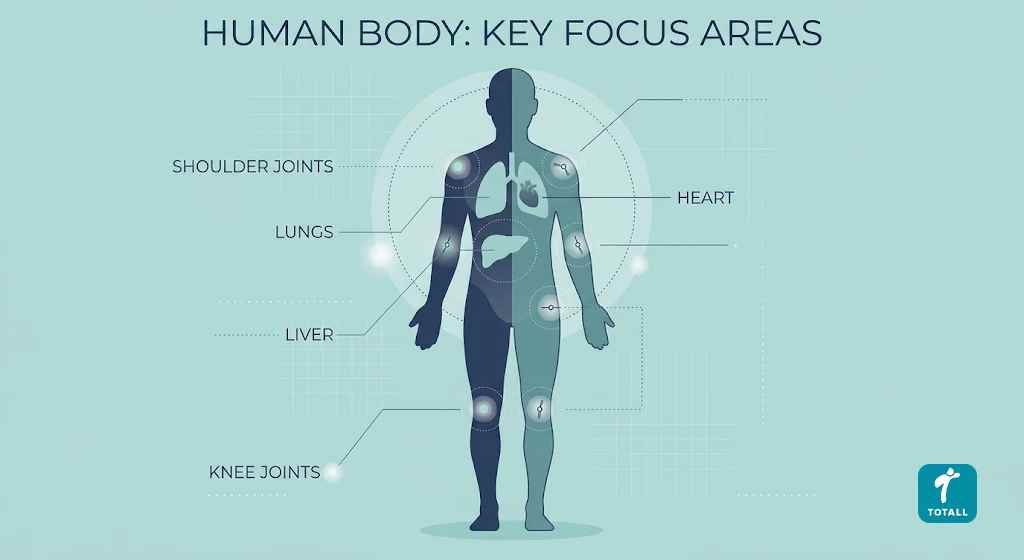
The relationship between obesity and these conditions is not always one-directional. PCOS can promote weight gain and be worsened by it; sleep apnea disrupts sleep in ways that promote further weight gain; insulin resistance and abdominal obesity typically reinforce each other. This is a large part of why treating obesity in isolation, without evaluating for these connected conditions, often produces disappointing results.
8. Obesity Rate in India: Scale of the Problem
Obesity has risen sharply in India over the past two decades, and it is no longer primarily an urban, affluent-class condition; national survey data shows it spreading into semi-urban and rural populations as well. The ICMR-INDIAB study, one of the largest nationally representative surveys of its kind, reported a weighted prevalence of 28.6 percent for generalized obesity (BMI of 25 or above, using the Indian clinical threshold) and 39.5 percent for abdominal obesity (waist circumference of 90 cm or more in men, 80 cm or more in women), indicating that central fat accumulation is markedly more widespread than BMI-based obesity alone.
An analysis of National Family Health Survey-5 (NFHS-5) data, India’s largest health survey, found abdominal obesity in about 40 percent of women and 12 percent of men nationally, rising to 49 percent in women aged 30 to 39 and roughly 57 percent in women aged 40 to 49. It’s worth noting this particular study used a waist-circumference threshold of 94 cm for men (rather than the 90 cm Indian clinical threshold used by ICMR-INDIAB) alongside 80 cm for women, and used the global BMI cutoffs (25/30) rather than the Asian-Indian ones to define overweight and obesity, so its figures reflect a slightly different, more conservative definition for men specifically. Despite that, the study identified urban residence, higher household wealth, and older age as factors associated with higher risk, and the sex gap it found, abdominal obesity roughly three times more common in women than men, is consistent across datasets even where the exact percentages differ.
This is not a distant public health statistic; it is the reason India has developed its own BMI classification system rather than importing Western thresholds wholesale, and why obesity is increasingly treated in Indian clinical practice as an early, modifiable risk factor rather than something to address only after diabetes or heart disease has already developed.
9. Obesity and PCOS
Polycystic Ovary Syndrome and obesity are closely intertwined in a large proportion of cases, though PCOS also occurs in women who are not overweight. Insulin resistance sits at the centre of this relationship: it is common in PCOS regardless of body weight, and when it coexists with excess weight, it tends to worsen both the metabolic and reproductive symptoms of PCOS, including irregular cycles, acne, and excess hair growth. The encouraging clinical reality is that even modest weight loss can improve metabolic health and, in some women with PCOS and excess weight, ovulation and cycle regularity, which is why weight management is typically a first-line part of PCOS treatment plans rather than a side note. See TOTALL’s approach to PCOS diagnosis and treatment.
10. Childhood Obesity in India
Childhood obesity is a growing concern in Indian cities, driven by many of the same factors affecting adults: reduced outdoor play, higher consumption of processed and sugar-sweetened food, and increased screen time. It carries its own specific risks, including a higher likelihood of the child becoming an obese adult, earlier onset of insulin resistance, and psychological effects tied to social stigma at a formative age. Pediatric BMI is assessed differently from adult BMI, using age- and sex-specific growth charts rather than fixed adult cutoffs, so a child’s weight should always be evaluated by a pediatrician against the correct reference chart rather than an adult BMI calculator.
11. How Is Obesity Treated? A Realistic Overview
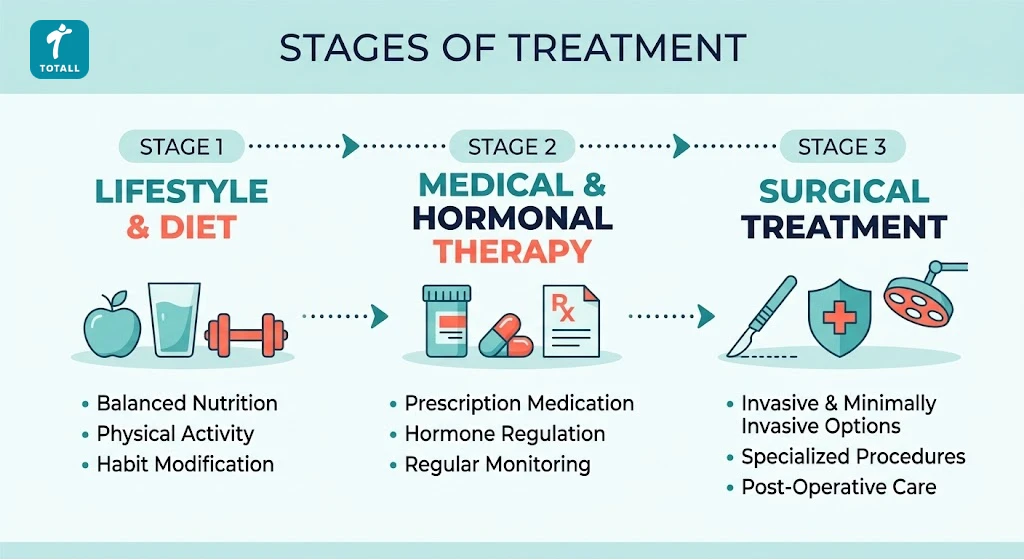
There is no single “best treatment for obesity” that applies to everyone; the right approach depends on BMI class, the presence of related conditions like diabetes or PCOS, prior weight loss attempts, and personal preference. What the evidence does support clearly is a structured, escalating approach rather than jumping straight to the most aggressive option, and combining strategies rather than relying on just one.
Lifestyle: Diet, Activity, and Behaviour
Nutrition and physical activity remain the foundation of every obesity treatment plan, including for people who go on to use medication or surgery, because habits built here determine whether other treatments hold over the long term. Effective dietary approaches for Indian patients typically focus on a sustainable calorie deficit built around traditional, minimally processed foods (dals, vegetables, whole grains, and adequate protein) rather than restrictive fad diets, alongside regular physical activity combining both cardio and resistance training to protect muscle mass while losing fat. Behavioural support, whether through a dietitian, structured counselling, or peer support, meaningfully improves how well lifestyle changes are sustained past the first few months, which is typically where unsupported attempts fail.
Where Yoga Fits In
Yoga is frequently searched as an obesity remedy in India. The evidence here is genuinely mixed rather than strongly supportive: systematic reviews of yoga for weight loss specifically have generally found the evidence inconclusive, limited by small and short studies, while more recent research has found more consistent benefit for cardiometabolic markers such as blood pressure. In practical terms, yoga is best treated as a useful complement to physical activity, for flexibility, stress regulation, and possibly blood pressure, rather than relied on as a stand-alone weight-loss method; it works best alongside, not instead of, cardio and resistance training.
Does Obesity Treatment Differ for Men and Women?
The core principles of evaluation and treatment are the same for men and women, but a few considerations differ in practice. In women, obesity frequently coexists with PCOS and its associated insulin resistance and fertility impact, which changes how a treatment plan is sequenced. In men, obesity is associated with lower testosterone levels and can contribute to erectile dysfunction, which is worth raising with a doctor rather than treating as a separate, unrelated issue. National data also shows women, particularly those in their thirties and forties, carrying a disproportionate share of abdominal obesity in India, which is part of why waist measurement is emphasised for women specifically, even when BMI looks unremarkable.
Medical Treatment: Correcting Hormonal Drivers and Anti-Obesity Medication
When lifestyle changes alone are insufficient, doctor-supervised medical treatment becomes appropriate. This starts with identifying and correcting any underlying hormonal driver, such as untreated hypothyroidism or PCOS-related insulin resistance, since treating the root cause often makes weight management substantially easier.
Where anti-obesity medication is indicated, GLP-1 receptor agonists such as semaglutide, and dual-action agents like tirzepatide, have become the most widely used and well-studied option in recent years, working by regulating appetite and gut-brain signalling rather than by any stimulant or “fat-burning” mechanism. Eligibility criteria vary by specific drug and by which clinical guideline is being followed, and have evolved over recent years, so this guide won’t state a single universal BMI cutoff; that determination is made by the prescribing doctor based on current guidance and your individual health profile. These are genuinely effective for the right patient, but they are prescription medicines with specific contraindications and a titration process that has to be managed by a doctor. TOTALL has published a complete, dedicated guide to how these medicines work, realistic results, dosing, safety and Indian pricing: read the full Semaglutide guide rather than relying on a summary here.
Surgical Treatment (Bariatric Surgery)
Bariatric surgery is an established and effective option for patients with severe obesity who have not achieved adequate results with lifestyle and medical treatment. It’s worth being specific here, since this is exactly the kind of detail where Indian-specific guidance differs from Western defaults, though the picture is more layered than a single number: the Obesity and Metabolic Surgery Society of India (OSSI), the country’s own professional body, officially upholds the 2011 IFSO Asia-Pacific Chapter consensus criteria, which recommends surgery for obesity at a BMI of 35 or above (with or without complications), or at a BMI of 30 or above specifically for inadequately controlled type 2 diabetes or metabolic syndrome; a BMI as low as 27.5 is considered only as a non-primary option under strict research-protocol conditions, not routine practice. OSSI additionally recognises a waist circumference of 90 cm or more in men, or 80 cm or more in women, alongside obesity-related complications, as a qualifying criterion in its own right. A separate, more recent 2022 global guideline (ASMBS/IFSO) proposes lower Asian-adjusted thresholds still (clinical obesity at BMI 25, surgery offered from 27.5), but this has not replaced OSSI’s own standard in routine Indian practice as of this writing, and that lower figure was primarily evidence-based for patients with type 2 diabetes specifically, not obesity generally. Common procedures include sleeve gastrectomy and gastric bypass, both of which work by altering stomach capacity and, in some procedures, the digestive pathway, producing significant and often durable weight loss along with improvement or remission of related conditions like type 2 diabetes in many patients. Surgery is a major decision with real risks and a lifelong nutritional adjustment, and final eligibility is always determined through a structured pre-surgical evaluation, not by BMI number alone. A full breakdown of procedures, eligibility, cost, and recovery in India is covered in TOTALL’s dedicated guide to bariatric surgery in India.
Choosing Between These Options
In practice, these are not mutually exclusive stages a patient must exhaust one at a time in every case; the right starting point depends on BMI, existing complications, and how urgently a related condition like uncontrolled diabetes needs to be addressed. This is precisely the judgment a structured medical evaluation is for. TOTALL’s obesity management programme in Indore combines metabolic and hormonal assessment, personalised nutrition planning, and, where appropriate, GLP-1 based therapy under specialist supervision, rather than offering a single generic weight-loss plan to every patient.
12. When Should You See a Doctor About Your Weight?
A structured evaluation is worth pursuing if any of the following apply: your BMI falls at or above 25 using the Indian classification, your waist circumference exceeds 90 cm (men) or 80 cm (women), you have a family history of diabetes, heart disease, or PCOS, you have tried diet and exercise consistently for several months without meaningful change, or you already have a related condition such as high blood pressure, fatty liver, or irregular periods. An earlier assessment gives you the chance to identify obesity-related complications and intervene before additional ones develop, rather than waiting until a complication like diabetes has already appeared. If you are searching for an obesity doctor or obesity clinic in Indore, book a consultation with TOTALL’s endocrine and obesity-medicine team for a full metabolic work-up rather than starting treatment based on a BMI number alone.
13. Common Myths About Obesity
| Myth | Fact |
|---|---|
| Obesity is simply a matter of willpower. | Body weight is regulated by hormones, genetics, and neurological appetite signals, alongside behaviour. Treating it purely as a willpower issue ignores well-documented biological drivers and delays effective treatment. |
| You can tell someone is unhealthy just by looking at them. | Fat distribution matters more than overall size for health risk; a person with a “normal” BMI but high abdominal fat can carry more metabolic risk than someone with a higher BMI and less central fat. |
| Crash diets are an effective long-term solution. | Very restrictive diets are difficult to sustain and are strongly associated with weight regain once normal eating resumes; gradual, sustainable change holds up better over years, not weeks. |
| Weight-loss medication is only for people who “couldn’t do it the hard way.” | GLP-1 medicines and other treatments address genuine biological drivers of appetite and weight regulation; they are a medical tool for an eligible patient, not a shortcut that bypasses effort. |
| Thin people cannot have obesity-related health problems. | Metabolically unhealthy patterns, including insulin resistance and abnormal fat distribution, can occur at a normal BMI, particularly in Indian populations. A person can carry meaningful metabolic risk without meeting the BMI definition of obesity, which is part of why India uses lower BMI cutoffs than the global standard and looks at waist circumference alongside BMI. |
14. Frequently Asked Questions
What is the definition of obesity?
Obesity is a chronic medical condition marked by excess body fat significant enough to raise the risk of other health problems such as diabetes, heart disease, and joint disease. It is measured using BMI alongside waist circumference, with lower BMI thresholds applied to Indian and other Asian populations than to Western populations.
What are 5 symptoms of obesity?
Common associated signs include breathlessness on mild exertion, excessive sweating, disrupted sleep or snoring, joint pain (particularly the knees), and darkened, thickened skin in body folds. These are indicators worth getting evaluated, not a self-diagnosis checklist.
What is type 3 obesity? What is class 3 obesity?
Class 3 obesity, sometimes still called “morbid obesity,” refers to a BMI of 40 or above on the global scale, representing the most severe category and generally warranting evaluation for the full range of treatment options, including medical therapy and bariatric surgery.
What’s the difference between class 1, 2, and 3 obesity?
On the global BMI scale, Class 1 is 30 to 34.9, Class 2 is 35 to 39.9, and Class 3 is 40 and above. Health risk generally increases with each class, though individual risk also depends heavily on fat distribution and related conditions, not the class number alone.
Is there a class 4 obesity?
No officially recognised “Class 4” exists in mainstream BMI classification. Some bariatric surgery literature informally uses “super obesity” for BMI above roughly 50, but this is not a standard diagnostic class.
How is obesity treated? What is the best treatment for obesity?
There is no single best treatment for everyone. Management typically starts with structured lifestyle change (diet, activity, behavioural support), escalating to doctor-supervised medical treatment, including hormonal correction and GLP-1 medicines where appropriate, and bariatric surgery for severe obesity that has not responded to other approaches. The right combination depends on BMI class, related conditions, and individual response, determined through medical evaluation.
How do I know if I am overweight? How do I check if I have obesity?
Calculate your BMI (weight in kg divided by height in metres squared) and compare it against the Indian classification, where 23 to 24.9 is overweight and 25 or above is obese, then measure your waist circumference. A BMI or waist measurement in these ranges is a reason to get a proper clinical evaluation rather than a diagnosis by itself.
Is obesity a disease or a condition?
Major medical bodies, including the World Health Organization, describe obesity as a chronic, relapsing disease arising from complex interactions between genetics, neurobiology, eating behaviour, and environment, not merely a risk factor or lifestyle choice.
What are the causes of obesity?
Obesity results from a combination of factors: genetics, hormonal conditions such as hypothyroidism, insulin resistance, and PCOS, certain medications, sleep and stress patterns, and the surrounding food and activity environment. It is rarely caused by a single factor alone.
How long can you live with class 3 obesity?
Class 3 obesity is associated with a meaningfully higher risk of serious complications and reduced life expectancy compared to a healthy weight, but individual outcomes vary widely depending on related conditions, treatment, and overall health management. This is a question best discussed directly with a treating doctor who has your full medical picture, not answered with a general number.
What foods fight obesity? How to decrease obesity?
No single food “fights” obesity; sustainable results come from an overall dietary pattern built around vegetables, whole grains, adequate protein, and controlled portions of processed and sugar-dense food, combined with regular physical activity. A dietitian-guided plan tailored to individual health conditions tends to outperform generic food lists.
Can obesity be cured?
Obesity is best understood as a manageable chronic condition rather than something with a one-time “cure.” Sustained weight loss and long-term maintenance, through lifestyle change, medical treatment, or surgery where appropriate, can bring weight and related health risk down substantially and keep it there, but ongoing management, the same way hypertension or diabetes is managed long-term, tends to produce better lasting results than expecting a permanent fix from a short course of treatment.
Can obesity cause hair loss?
Indirectly, yes, particularly through the hormonal conditions obesity is often linked with. Insulin resistance and PCOS, both common alongside obesity, are associated with hair thinning in women, and rapid weight fluctuations or nutritional deficiencies can also contribute. Hair loss alongside weight gain is worth mentioning to a doctor as part of the same evaluation rather than treating it as a separate cosmetic issue.
Can obesity cause high blood pressure?
Yes, this is one of the best-established associations in obesity medicine. Excess body fat, particularly visceral fat, increases blood volume and vascular resistance and affects hormonal pathways that regulate blood pressure, which is why hypertension is one of the most common complications screened for during an obesity work-up.
Where can I find an obesity doctor or clinic near me in Indore?
TOTALL Diabetes Hormone Institute in Indore runs a dedicated obesity management programme combining endocrine evaluation, nutrition planning, and medical or surgical referral where appropriate. You can book a consultation directly rather than starting treatment based on online information alone.
15. Key Takeaways
- Obesity is a chronic medical condition, not a description of appearance or a matter of willpower alone.
- India uses lower BMI cutoffs than the global standard (obesity at 25 rather than 30) because Indian bodies carry higher health risk at a given BMI than Western reference populations.
- Waist circumference (90 cm men, 80 cm women) matters alongside BMI, since abdominal fat carries outsized metabolic risk.
- Obesity is commonly linked to hormonal conditions including hypothyroidism, insulin resistance, and PCOS, which is why a proper work-up looks beyond weight alone.
- Treatment is not one-size-fits-all: lifestyle change, medical therapy including GLP-1 medicines, and bariatric surgery each have a role depending on BMI class and related conditions.
- Earlier evaluation, before a complication like diabetes develops, generally produces better long-term outcomes than waiting.
Sources
- World Health Organization — Obesity and overweight fact sheet
- WHO Expert Consultation — Appropriate body-mass index for Asian populations and its implications for policy and intervention strategies, The Lancet, 2004
- Misra A, et al. — Consensus Statement for Diagnosis of Obesity, Abdominal Obesity and the Metabolic Syndrome for Asian Indians, Journal of the Association of Physicians of India, 2009
- Misra A, Vikram NK, Ghosh A, et al. — Revised definition of obesity in Asian Indians living in India, Diabetes & Metabolic Syndrome: Clinical Research & Reviews, 2025
- Rubino F, Cummings DE, Eckel RH, et al. — Definition and diagnostic criteria of clinical obesity, The Lancet Diabetes & Endocrinology Commission, 2025
- Defining and Diagnosing Obesity in India: A Call for Advocacy and Action, including ICMR-INDIAB prevalence data
- Abdominal obesity in India: analysis using National Family Health Survey-5 (NFHS-5) data, The Lancet Regional Health – Southeast Asia, 2023
- Obesity and Metabolic Surgery Society of India (OSSI) — Guidelines for Patient and Procedure Selection for Bariatric and Metabolic Surgery, Obesity Surgery, 2020