
Medically reviewed by TOTALL Diabetes Hormone Institute, Indore.
Ask a woman with PCOS, now officially renamed PMOS (Polyendocrine Metabolic Ovarian Syndrome), why she’s struggling to lose weight, and there’s a good chance she’s already tried the standard advice: eat less, move more. Ask her whether it worked, and the answer is often no, not because she didn’t try hard enough, but because this condition changes the underlying biology that a generic calorie-deficit plan assumes is working normally. This is one of the more frustrating and least explained relationships in women’s health in India: obesity and PCOS/PMOS feed each other, and treating either one in isolation tends to produce disappointing results. This guide covers the mechanism, what it means for diagnosis and treatment, and where PCOS-specific weight management genuinely differs from the general approach covered in our main obesity guide.
How Are Obesity and PCOS (Now PMOS) Connected?
A quick note before the mechanism: in May 2026, a global consensus of more than 50 patient and professional organizations, including the Endocrine Society and the International Androgen Excess and PCOS Society, officially renamed this condition from Polycystic Ovary Syndrome (PCOS) to Polyendocrine Metabolic Ovarian Syndrome (PMOS). The reasoning: research found no actual increase in abnormal ovarian cysts in the condition, and the old name’s focus on “ovary” and “cysts” undersold what is really a multisystem hormonal and metabolic disorder affecting weight, skin, mental health, and fertility together. Nothing about diagnosis or treatment has changed, only the name, and a three-year transition period means both PCOS and PMOS will appear side by side in clinics and search results until at least 2028. This guide uses PCOS/PMOS interchangeably below, since that’s how you’ll see it referred to in the coming years, and covers the same condition either way.
Polycystic Ovary Syndrome, now PMOS, is a common hormonal disorder in women of reproductive age, marked by some combination of irregular ovulation, elevated androgen (male hormone) levels, and characteristic ovarian appearance on ultrasound. Under the 2023 international evidence-based PCOS guideline, developed by a global multidisciplinary panel and still the reference standard for diagnosis during this naming transition, diagnosis requires two of three features: irregular or absent ovulation, clinical or biochemical signs of excess androgens, and polycystic ovaries on ultrasound (or, more recently, elevated AMH levels as an alternative to ultrasound), after other conditions that mimic the syndrome have been ruled out. That last part matters clinically: conditions like hypothyroidism and Cushing’s syndrome can produce similar symptoms and need to be excluded before a diagnosis is confirmed, which is one reason self-diagnosis from symptoms alone is unreliable.
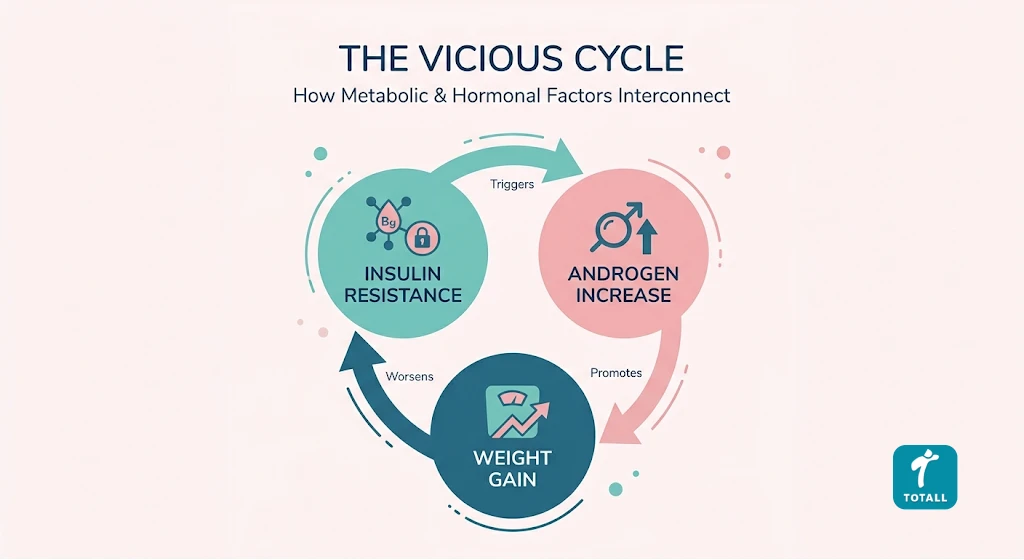
The connection to obesity runs through insulin resistance, a state where the body’s cells respond less effectively to insulin, prompting the pancreas to produce more of it. Insulin resistance is present in a large share of women with PCOS, including many who are not overweight by BMI, but it becomes more pronounced and more metabolically damaging when excess weight, particularly abdominal fat, is also present. Higher insulin levels, in turn, stimulate the ovaries to produce more androgens, which worsens the hallmark PCOS symptoms: irregular periods, acne, and excess hair growth (hirsutism). At the same time, the hormonal disruption from PCOS itself, along with the fatigue, mood changes, and appetite effects that often come with it, tends to make weight gain easier and weight loss harder. It becomes a loop where each condition reinforces the other, which is exactly why a plan that addresses only the weight, or only the hormones, tends to underperform.
How Common Is This in India?
Estimates of PCOS prevalence in India vary widely by study population and diagnostic criteria used, ranging from roughly 2 percent to over 30 percent of women of reproductive age depending on the region and methodology, generally higher than commonly cited global averages. What’s more consistent across Indian studies is the metabolic overlap: women with PCOS in Indian cohorts show substantially higher rates of metabolic syndrome, a cluster that includes abdominal obesity, high blood pressure, and abnormal cholesterol, compared to women without PCOS. If you’re checking your own cholesterol or blood pressure as part of a PCOS work-up, that overlap is exactly why; PCOS is rarely just a reproductive issue.
Where PCOS Symptoms and Obesity Symptoms Overlap, and Where They Differ
Weight gain, particularly around the abdomen, is common in PCOS, but it is not universal; a meaningful share of women with PCOS have a normal BMI and still carry the metabolic risk associated with insulin resistance. Symptoms more specific to PCOS than to obesity generally include irregular or absent periods, excess facial or body hair, acne that persists into adulthood, thinning scalp hair, and difficulty conceiving. Darkened skin patches in body folds (acanthosis nigricans), covered in more detail in the main obesity guide’s signs and associated conditions section, can appear in both PCOS and obesity independently, since both are linked to insulin resistance, and its presence in either context is worth mentioning to a doctor.
Obesity, PCOS, and Fertility
Irregular or absent ovulation, common in PCOS, is a direct cause of reduced fertility, and excess weight compounds this in a few specific ways: it can worsen insulin resistance and androgen levels further, reduce the effectiveness of some fertility medications, and is associated with higher miscarriage rates in some studies. This is genuinely one area where the evidence for weight loss helping is strong: even a modest reduction in weight has been shown in multiple studies to improve ovulation frequency and response to fertility treatment in women with PCOS and excess weight. This is not a guarantee for any individual, and fertility involves factors beyond weight alone, but it is one of the more evidence-backed reasons to prioritize weight management specifically (rather than fertility medication alone) as a first step for many women in this situation.
How PCOS Is Diagnosed Alongside Obesity
Because PCOS is a clinical diagnosis made after excluding other causes, a proper work-up typically includes a menstrual history, a physical examination for signs of excess androgen, blood tests (including thyroid function, prolactin, and androgen levels), and often a pelvic ultrasound. If you’re also being evaluated for obesity itself, this usually happens alongside the BMI and waist-circumference measurement, and metabolic blood work such as fasting glucose, insulin, and a lipid profile, described in more detail in the obesity guide’s diagnosis section, since PCOS and obesity share enough metabolic overlap that evaluating one without the other misses part of the picture. TOTALL’s in-house pathology lab handles the relevant hormone and metabolic panels on-site, which keeps a multi-part work-up like this from turning into a weeks-long process of chasing different labs.
Treatment: Where PCOS-Specific Weight Management Differs
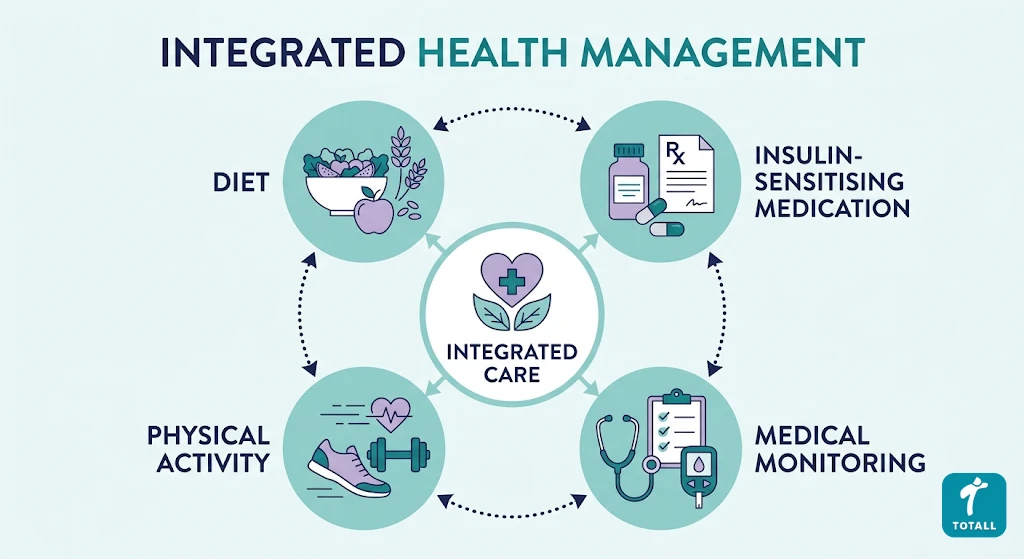
The foundation is similar to general obesity treatment (nutrition, physical activity, and behavioural support), but a few things are approached differently when PCOS is the underlying driver.
Addressing Insulin Resistance Directly
Because insulin resistance sits at the centre of the PCOS-obesity loop, medications that improve insulin sensitivity, most commonly metformin, are frequently used alongside lifestyle change, even in women who are not diagnosed with diabetes. This is a different starting point than typical obesity treatment, where a diabetes medication wouldn’t normally be considered a first-line option in someone without diabetes.
Dietary Approach
General dietary principles from the main obesity guide still apply (a sustainable deficit built around whole foods rather than restrictive fad diets), but women with PCOS often see better results from an eating pattern that specifically moderates refined carbohydrates and sugar, since these have an outsized effect on insulin levels in someone who’s already insulin resistant. This isn’t about eliminating carbohydrates entirely; it’s about pairing them with protein and fibre and being more deliberate about portion and timing than someone without insulin resistance might need to be.
GLP-1 Medicines and PCOS
For women with PCOS and obesity who haven’t achieved adequate results with lifestyle change and metformin, GLP-1 receptor agonists such as semaglutide are increasingly used off-label for weight management in this population, working through the same appetite-regulation mechanism described in TOTALL’s complete Semaglutide guide. Eligibility, dosing, and monitoring considerations don’t fundamentally change because PCOS is the underlying cause, but the decision of whether and when to add this to a PCOS treatment plan is one worth making with a doctor who’s looking at the full hormonal picture, not just the weight.
Fertility-Focused Treatment
When pregnancy is the goal, treatment sequencing often shifts: weight management and metformin are frequently tried first, since improving insulin sensitivity alone can restore ovulation in some women, before moving to ovulation-induction medication if needed. This is a meaningfully different treatment order than obesity management without a fertility goal, which is why it matters to tell your doctor upfront if pregnancy is part of the plan.
When to See a Doctor
Irregular periods (fewer than eight to nine a year, or cycles longer than 35 days), excess facial or body hair, persistent adult acne, difficulty conceiving after a year of trying, or unexplained weight gain alongside any of these are all reasons to get evaluated rather than waiting it out. Book a consultation with TOTALL’s endocrine team in Indore for a combined hormonal and metabolic work-up; because PCOS and obesity are managed together in practice, a single evaluation can usually cover both rather than needing separate appointments with different specialists.
Frequently Asked Questions
Does obesity cause PCOS, or does PCOS cause obesity?
Neither causes the other in a simple one-directional way. PCOS involves hormonal and insulin-related changes that make weight gain more likely and weight loss harder, while excess weight, particularly abdominal fat, worsens the insulin resistance and androgen levels that drive PCOS symptoms. They typically reinforce each other rather than one being the sole cause of the other.
Can you have PCOS without being overweight?
Yes. A meaningful proportion of women with PCOS have a normal BMI, sometimes called “lean PCOS,” and can still have significant insulin resistance and metabolic risk despite a normal weight. BMI alone should not be used to rule PCOS in or out.
What is the best diet for PCOS weight loss?
There is no single universal “PCOS diet,” but approaches that moderate refined carbohydrates and added sugar, include adequate protein and fibre at each meal, and create a modest sustainable calorie deficit tend to perform well, since they address the insulin resistance driving much of PCOS-related weight gain. A dietitian familiar with PCOS can tailor this to individual food preferences rather than relying on a generic meal plan.
Can losing weight reverse PCOS?
Weight loss doesn’t cure PCOS, since the underlying hormonal tendency generally persists, but it can meaningfully improve symptoms, including cycle regularity, androgen levels, and fertility, in many women with PCOS and excess weight. Ongoing management, rather than a one-time fix, tends to sustain these improvements.
Is PCOS linked to infertility?
Yes, irregular or absent ovulation is a direct and common cause of reduced fertility in PCOS. It is treatable in many cases through a combination of weight management, insulin-sensitising medication, and, where needed, ovulation-induction treatment.
Is PCOS now called PMOS? What does the name change mean for me?
Yes. In May 2026, a global consensus of more than 50 patient and professional organizations officially renamed Polycystic Ovary Syndrome (PCOS) to Polyendocrine Metabolic Ovarian Syndrome (PMOS), reflecting the fact that the condition is a multisystem hormonal and metabolic disorder rather than primarily an ovarian one. If you were already diagnosed with PCOS, your diagnosis remains valid and nothing about your treatment needs to change because of the new name. Both PCOS and PMOS will be used interchangeably during a three-year transition period through 2028, so you’ll likely see both terms in circulation for the next few years.
Sources
- Teede H, Bahri Khomami M, Morman R, et al. — Polyendocrine metabolic ovarian syndrome, the new name for polycystic ovary syndrome: a multistep global consensus process, The Lancet, 2026
- Endocrine Society — Polyendocrine Metabolic Ovarian Syndrome: New name to improve diagnosis and care, press release, May 2026
- Teede H, et al. — Recommendations From the 2023 International Evidence-based Guideline for the Assessment and Management of Polycystic Ovary Syndrome, Journal of Clinical Endocrinology & Metabolism, 2023
- Purwar A, Nagpure S — Insulin Resistance in Polycystic Ovarian Syndrome, Cureus, 2022
- Assessment of metabolic syndrome in infertile women with PCOS in a rural population of South India: A cross-sectional study
- TOTALL — Complete guide to Obesity: Causes, Symptoms, Types and Treatment in India