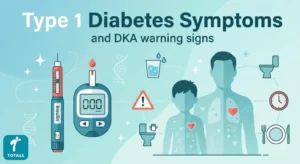
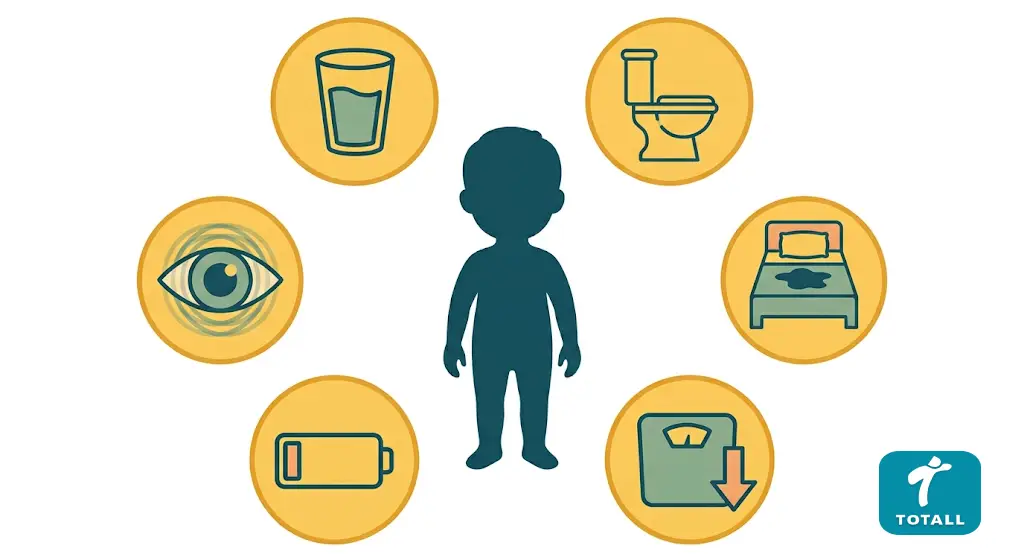
The signs of diabetes in children are increased thirst, passing urine more often (including new bedwetting in a child who was dry), unexplained weight loss, tiredness, constant hunger and blurry vision. In most young children these come from type 1 diabetes and appear over days to weeks. In older, overweight children and teenagers, type 2 diabetes is possible and can be nearly silent. Any child with these signs needs a blood sugar check the same day, not after a week of waiting.
Parents often delay because the signs look ordinary. A thirsty child in an Indian summer, a tired teenager during exams, a boy who wets the bed again after a cold: each has an obvious explanation, and the real cause is easy to miss. This guide explains the signs of diabetes in children by age, which ones are most often mistaken for something else, how type 2 diabetes shows up in teenagers, what to do at home and at school, and when to go straight to a hospital. The general picture for adults is in our main guide to the signs of diabetes.
Key points
- Thirst, frequent urination, weight loss and tiredness together are the pattern that matters. One alone is rarely diabetes.
- New bedwetting in a child who has been dry for months, with thirst, is a classic clue.
- In babies and toddlers the signs are subtler: very wet nappies, poor feeding, irritability and failure to gain weight.
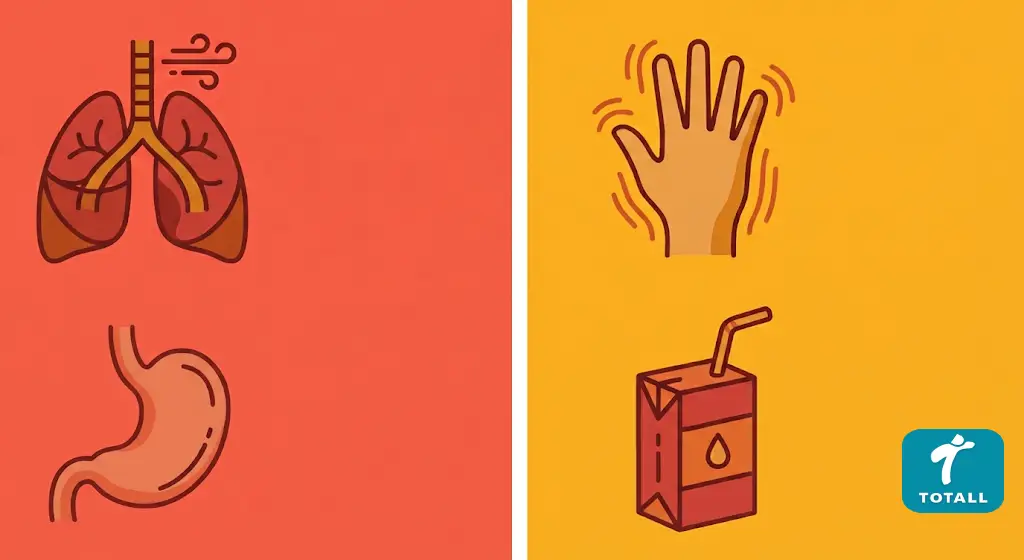
- Vomiting, abdominal pain, fast deep breathing or drowsiness in a child with high sugar is an emergency. Go to a hospital immediately.
What this guide covers
- Why the signs of diabetes in children are often missed
- Signs of diabetes in children by age
- Signs of diabetes in children that are easily mistaken for something else
- Type 2 diabetes in teenagers
- Newborns, infants and rare forms
- Emergency signs of diabetes in children
- How the signs of diabetes in children are tested and confirmed
- What parents should do
- School, teenagers and emotional wellbeing
- Care in Indore
- बच्चों में डायबिटीज के लक्षण (हिंदी में सार)
- Frequently asked questions
Why the signs of diabetes in children are often missed
Doctors no longer use the term “juvenile diabetes”, but people who search for juvenile diabetes symptoms are almost always describing type 1 diabetes, which is covered here. Children cannot always describe how they feel, and young ones may not connect thirst or tiredness with illness at all. Parents tend to assume a stomach bug, a growth spurt, hot weather or exam pressure. Meanwhile type 1 diabetes, the most common type in young children, moves fast: insulin falls over a few weeks, sugar climbs, and the body starts to burn fat. If no one stops to ask whether the signs add up, a child can go from “a bit off” to seriously ill in a short time. A significant share of children are diagnosed only when they arrive at hospital in ketoacidosis. The most useful habit for a parent is to look at the whole pattern, and to ask for a blood sugar test whenever it is in doubt. A fingerprick test takes a minute and gives an answer.
Signs of diabetes in children by age
The signs of diabetes in children change with age, mainly because a baby, a school child and a teenager can each describe, or hide, what they feel in a different way.
| Age | What parents may notice | Why it is easy to miss |
|---|---|---|
| Babies and toddlers (under 4) | Very wet nappies, heavy diaper rash or thrush, poor feeding or constant feeding, irritability, weight not increasing, fast breathing, dehydration | The child cannot ask for water or say what hurts. It looks like a stomach bug or teething |
| Young children (4 to 11) | Thirst, frequent urination, bedwetting after being dry, tiredness, hunger, weight loss, poor concentration, mood changes | Blamed on heat, a growth spurt, school stress or a cold |
| Teenagers (12 to 18) | Tiredness, weight loss (type 1) or weight gain (type 2), blurry vision, frequent infections, dark neck patches, in girls irregular periods | Blamed on exams, hormones or “teenage laziness” |
Signs of diabetes in babies and toddlers
Under the age of four, the signs of diabetes in toddlers are subtle. Nappies are soaked far more often than usual, and a child who was potty trained starts having accidents. Thirst may show as a baby feeding constantly or a toddler who grabs for any drink. Other clues are a rash that will not clear (yeast thrives on sugar), unusual irritability or sleepiness, poor weight gain, and fast, laboured breathing in the later stages. Because infants dehydrate and deteriorate quickly, do not wait to see whether these signs settle.
Signs of diabetes in school-age children
This is the age group in which the classic picture is clearest. A child drinks far more water than usual, asks to go to the toilet repeatedly during class, and wets the bed again after months of dry nights. The child may eat a lot and still lose weight, look tired and pale, lose interest in play, or have trouble concentrating. Teachers may report daydreaming or irritability first. Fruity-smelling breath and stomach pain are later warnings that ketones are building up. When these signs of diabetes in kids appear together, a blood sugar test is overdue.
Signs of diabetes in teenagers
Teenagers can have either type. Among the signs of diabetes in children at this age, a thin teenager with rapid weight loss, thirst and fatigue is most likely to have type 1 diabetes. An overweight teenager with few symptoms, dark patches on the neck and a family history is more likely to have type 2. In both, blurry vision, repeated skin or genital infections and slow healing can occur. In girls, irregular periods, acne and excess facial hair may point to PCOS, which is linked with insulin resistance. Many diabetes symptoms in teens, like other signs of diabetes in children, are put down to hormones, exams or “just being tired”, so the pattern matters more than any single sign. Our guide on signs of diabetes in women covers the PCOS link in more detail.
Signs of diabetes in children that are easily mistaken for something else
Several of the signs of diabetes in children have common innocent explanations, which is why it helps to know what separates them.
Bedwetting. Many healthy children wet the bed, and it is usually not diabetes. What matters is a change: a child who was reliably dry for six months or more and then starts wetting the bed every night, particularly with thirst and weight loss.
Thirst. Children drink more in summer and after play. Diabetic thirst is persistent, continues at night, and comes with frequent urination in large volumes.
Hunger. Growth spurts raise appetite. In diabetes, a child eats well but loses weight, or is hungry again soon after a full meal.
Tiredness. Late nights and exams tire any child. Diabetic tiredness does not improve with rest and is usually accompanied by other signs.
Stomach pain and vomiting. Gastroenteritis is common, but abdominal pain with vomiting and fast breathing in a child who also has thirst and weight loss may be diabetic ketoacidosis. Check blood sugar before assuming a stomach bug.
A practical rule: two or more of thirst, frequent urination, weight loss and tiredness, or any of these with new bedwetting, warrants a blood sugar test the same day. Weight loss with thirst is the combination to take most seriously.

Type 2 diabetes in teenagers
Type 2 diabetes used to be called “adult-onset”, but it is now found in overweight children and teenagers in India and elsewhere. It tends to appear around puberty, when natural changes in hormones make the body more resistant to insulin, and it is more common in girls. The challenge is that it is often silent. A teenager may have no thirst, no weight loss and no bedwetting, and the diagnosis is made because of a risk marker or a routine test.
The risk markers to look for are being overweight, especially around the waist, dark velvety patches on the back of the neck or armpits (acanthosis nigricans), a parent or sibling with type 2 diabetes, a mother who had diabetes during pregnancy, PCOS in girls, high blood pressure, fatty liver on ultrasound, and very low physical activity. South Asian children develop insulin resistance at lower body weights than children in many other populations. These silent signs of diabetes in children are easy to overlook. If your child has dark neck patches or an overweight BMI with any of the others, ask the paediatrician for a blood sugar test even if the child feels fine.
Current paediatric guidance suggests screening overweight children and teenagers who have additional risk factors, usually starting at about age 10 or at the start of puberty and repeating every few years. Type 2 diabetes that begins in the teens can progress faster than in adults, which is a strong reason to catch it early. Our guides on childhood obesity in India and BMI cutoffs for Indians explain how to read a child’s weight, and the section on prediabetes in our early signs of diabetes guide applies to teenagers as well.
Newborns, infants and rare forms
Parents searching for the signs of diabetes in a 4-month-old or 6-month-old are usually worried about a baby who is feeding poorly, passing a lot of urine or not gaining weight. True diabetes at this age is rare. Neonatal diabetes, diagnosed in the first six months of life, is usually a genetic condition rather than autoimmune type 1 diabetes, and some forms can be treated with tablets instead of insulin once the gene is identified. Any baby with persistent high sugar, poor weight gain or dehydration needs urgent paediatric assessment, and genetic testing may be offered.
In older children and teenagers, two other forms are worth knowing. MODY (maturity-onset diabetes of the young) is an inherited form that runs through families across several generations and does not usually involve obesity. And in some Indian children and young adults, diabetes linked to pancreatic disease can occur. Both are reasons why a doctor may do antibody and other tests rather than assume the type. The differences between types are explained in our guide on type 1 diabetes symptoms versus type 2.
Emergency signs of diabetes in children
Go to a hospital immediately, or call 112, if a child with diabetes, or a child you suspect has diabetes, has any of the following: repeated vomiting, severe stomach pain, fast deep breathing, a fruity or acetone smell on the breath, marked drowsiness, confusion, or loss of consciousness. These are the signs of diabetic ketoacidosis, which we explain in full, including what hospital treatment involves, in our guide to type 1 diabetes symptoms and DKA. Do not wait for the next appointment, and do not try to treat it at home with fluids or remedies.
The opposite emergency is low blood sugar, which can occur in children on insulin. The signs are shakiness, sweating, pallor, sudden hunger, irritability, crying for no reason, headache and confusion. In severe cases a child can become drowsy or have a seizure. The response is fast-acting sugar (glucose tablets, juice or glucose gel) right away if the child is awake and can swallow, then a recheck after 15 minutes. If the child cannot swallow or is unconscious, nothing should be put in the mouth, and urgent medical help is needed.
How the signs of diabetes in children are tested and confirmed
The tests are the same as in adults, with a few differences in practice. A random blood glucose of 200 mg/dL or higher in a child with classic signs is enough to diagnose diabetes. Otherwise, doctors use a fasting glucose of 126 mg/dL or higher, a 2-hour glucose of 200 mg/dL or higher, or an HbA1c of 6.5% or higher, confirmed on a repeat test unless the diagnosis is clear. If type 1 diabetes is suspected, a urine or blood ketone test and islet antibody tests are often added. HbA1c can be misleadingly low at the onset of type 1 diabetes, because sugar has risen quickly, so glucose readings carry more weight.
Parents often worry about needles, but diagnosis usually needs one blood draw and, sometimes, a fingerprick. If your child already has a glucometer at home because of a family member, a reading of 200 mg/dL or more with symptoms means go to a clinic or hospital that day.
What parents should do
If you notice the signs of diabetes in children, whether your own or a relative’s, act in this order. First, do not restrict water, and do not try to fix it with a change in diet. Second, get a blood sugar test the same day, at a clinic, laboratory or hospital. Third, if there is vomiting, abdominal pain, fast breathing or drowsiness, go to an emergency department and tell them you suspect diabetes. Fourth, if the test shows diabetes, ask to see a doctor experienced in childhood diabetes, preferably a paediatric endocrinologist, because treatment, diet, insulin education and school planning are all part of the first week.
Diabetes in kids with a family history does not need symptoms to justify a check. Ask your paediatrician about screening, particularly for overweight children and teenagers.
School, teenagers and emotional wellbeing
Once a child is diagnosed, school becomes part of the treatment. Teachers should know the signs of low and high sugar, where glucose is kept, what to do if the child is unwell, and that the child may need to test, eat or use the toilet during class. A written school plan from the diabetes team helps. Children with type 1 diabetes can attend school, play sport and go on trips with sensible planning.
Diabetes is also an emotional load, especially in teenagers. Constant monitoring, food rules and being different from friends can cause stress, low mood and burnout. Some teenagers with type 1 diabetes skip insulin doses, which is dangerous and can lead to ketoacidosis. If your teenager is skipping insulin, or you notice unusual weight loss or an intense focus on weight, tell the diabetes team early, because help is available and this is common and treatable.
Care in Indore
If you see the signs of diabetes in children in your family, TOTALL Diabetes Hormone Institute in Indore treats diabetes of all types, including type 1 diabetes, and offers continuous glucose monitoring and ongoing sugar control support. For a child or teenager with weight concerns, see our pages on obesity and, for sugar tests, the pathology laboratory.
Book a diabetes test or consultation in Indore
TOTALL Diabetes Hormone Institute, BCM Health Island, Scheme No 54 (near Bombay Hospital and behind Prestige Management Institute), Indore, Madhya Pradesh 452010.
Open Monday to Saturday, 8:00 AM to 8:00 PM. Sunday closed. If your child is vomiting, breathing fast or drowsy, go to the nearest hospital or call 112.
Call 0731 244 3344 or 093024 43344, message on WhatsApp, or book an appointment online.
बच्चों में डायबिटीज के लक्षण (हिंदी में सार)
बच्चों में डायबिटीज के आम लक्षण हैं: बहुत प्यास लगना, बार-बार पेशाब, पहले से सूखे रहने वाले बच्चे का फिर से बिस्तर गीला करना, तेजी से वजन घटना, थकान, ज्यादा भूख और धुंधला दिखना। छोटे बच्चों में डायपर का बार-बार भीगना, चिड़चिड़ापन, ठीक से दूध न पीना और वजन न बढ़ना भी संकेत हो सकते हैं। इन्हें अक्सर पेट के संक्रमण, गर्मी या पढ़ाई के तनाव का असर मानकर टाल दिया जाता है।
अगर बच्चे में ये लक्षण एक साथ दिखें, तो उसी दिन शुगर की जांच कराएं। उल्टी, पेट दर्द, तेज गहरी सांस या बेहोशी जैसी हालत हो तो तुरंत अस्पताल जाएं या 112 पर कॉल करें। मोटे बच्चों और किशोरों में गर्दन पर काले धब्बे टाइप 2 डायबिटीज का संकेत हो सकते हैं। इंदौर में जांच और परामर्श के लिए TOTALL में 0731 244 3344 पर संपर्क करें।
Frequently asked questions about the signs of diabetes in children
What are the first signs of diabetes in children?
The first signs are usually increased thirst, passing urine more often, new bedwetting in a child who was dry, tiredness, hunger and weight loss. In babies and toddlers, very wet nappies, poor feeding and irritability may be the only clues. A blood sugar test the same day gives a clear answer.
What are the signs of diabetes in toddlers?
In toddlers, look for soaked nappies or new accidents in a potty-trained child, constant thirst, a stubborn nappy rash, irritability, sleepiness and poor weight gain. Fast breathing and vomiting are later signs of an emergency. Do not wait to see if the signs settle. Get a blood sugar test promptly.
Is bedwetting a sign of diabetes in children?
Bedwetting alone usually is not. Many healthy children wet the bed. It becomes a warning sign when a child who has been dry for months starts wetting the bed every night, especially with thirst, weight loss or tiredness. In that case a blood sugar test is advisable.
What are the signs of diabetes in teenagers?
Teenagers may have thirst, frequent urination, weight loss and tiredness in type 1, or very few signs in type 2. Clues include blurry vision, repeated infections, dark patches on the neck, weight gain around the waist and, in girls, irregular periods. Many are blamed on hormones or exams.
Can children get type 2 diabetes?
Yes. Type 2 diabetes is increasingly found in overweight children and teenagers, usually around puberty. It is often silent, so risk markers such as dark neck patches, belly fat, high blood pressure and a family history are important. Screening is advised for overweight children with additional risk factors.
How do I know if my child has diabetes or just a stomach bug?
A stomach bug usually comes with fever or diarrhoea and settles in a day or two. Diabetes comes with thirst, frequent urination and weight loss, and vomiting with fast deep breathing suggests ketoacidosis. If you are unsure, check blood sugar before assuming it is a stomach bug.
What blood sugar level is diabetes in a child?
A random blood glucose of 200 mg/dL or higher with classic signs, a fasting glucose of 126 mg/dL or higher, a 2-hour glucose of 200 mg/dL or higher, or an HbA1c of 6.5% or higher indicates diabetes. A doctor confirms the diagnosis and works out the type.
Can a newborn or infant have diabetes?
It is rare. Neonatal diabetes appears in the first six months of life and is usually genetic. Signs include poor weight gain, frequent urination and dehydration. A baby with persistent high sugar needs urgent paediatric assessment, and genetic testing may allow treatment with tablets in some forms.
What should I do if I think my child has diabetes?
Do not restrict water or change the diet. Get a blood sugar test the same day. If your child is vomiting, breathing fast or drowsy, go to an emergency department immediately. If diabetes is confirmed, see a doctor experienced in childhood diabetes and ask for a school care plan.
Can children with diabetes go to school and play sports?
Yes. With a care plan, teachers who know the signs of low and high sugar, and sensible monitoring, children with diabetes can attend school, play sport and join trips. Parents should share the plan and supplies with the school.
Where can I get my child tested for diabetes in Indore?
Blood sugar tests are available at TOTALL Diabetes Hormone Institute, BCM Health Island, Scheme No 54, Indore, open Monday to Saturday from 8:00 AM to 8:00 PM. Call 0731 244 3344 or book through the appointment page. For emergencies, go to the nearest hospital.
References and further reading
- American Diabetes Association. Standards of Care in Diabetes, section on children and adolescents. professional.diabetes.org.
- International Society for Pediatric and Adolescent Diabetes (ISPAD). Clinical Practice Consensus Guidelines. ispad.org.
- NHS. Type 1 diabetes in children and young people. nhs.uk.
- World Health Organization. Diabetes fact sheet. who.int.
- International Diabetes Federation. IDF Diabetes Atlas. diabetesatlas.org.
- Indian Academy of Pediatrics. Guidelines on diabetes in children and adolescents.
About this article. Written by Dr. Sunil M Jain, Chairman and Managing Director of TOTALL Diabetes Hormone Institute (Madhya Pradesh Medical Council registration MP-2912, MCI registration 13607). This guide is for general education. It cannot diagnose your child, and it does not replace an examination by a doctor who knows your child’s history. If you think your child has signs of diabetes, get a blood sugar test and see a doctor. If a child with diabetes is vomiting, breathing fast or drowsy, go to a hospital immediately.